
Lemon Yogurt Loaf Cake
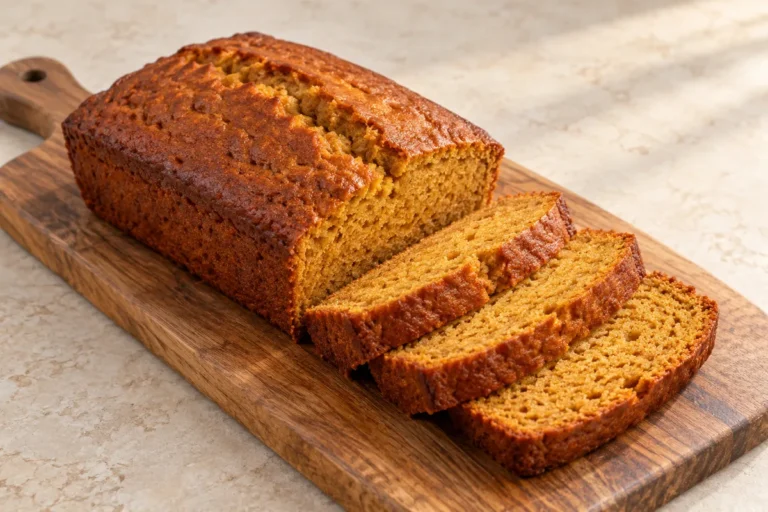
Lemon yogurt loaf cake uses plain yogurt, neutral oil and lemon zest in a simple stir-together batter. It is a plain loaf without icing, focused on a tender crumb and a clear lemon flavor. The important choices are the pan size, gentle mixing and checking the center before removing it from the oven.
This recipe fits a loaf tin approximately 23 × 13 cm. A smaller pan can overflow or leave a deep center that takes longer to bake. Prepare the tin before mixing so the batter can go into the oven promptly after the baking powder is hydrated.
Ingredients and lemon flavor
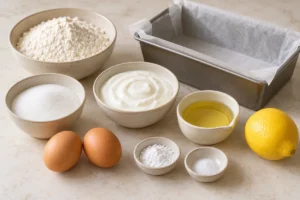
Measure 200 g plain all-purpose flour, 150 g sugar, two large eggs, 150 g plain yogurt, 80 ml neutral oil, 2 tablespoons lemon juice, 1 tablespoon finely grated lemon zest, 2 teaspoons baking powder and 1/4 teaspoon salt.
Wash and dry the lemon before zesting. Grate the yellow outer surface without scraping deeply into the bitter white pith. Measure both zest and juice rather than assuming every lemon yields the same amount. Zest brings aromatic oils; juice adds acidity but is not a substitute for all the zest.
Use plain yogurt rather than a heavily sweetened flavored product. Thick Greek-style yogurt and thinner plain yogurt can produce different batter consistency. Neutral oil keeps the flavor centered on lemon. A strong olive oil is a deliberate variation, not the default ingredient.
Four baking stages
1. Prepare the oven and tin
Heat the oven to 175°C (350°F). Line a 23 × 13 cm loaf tin with parchment, leaving an overhang for lifting. Lightly grease uncovered ends if needed. Measure flour, baking powder and salt into a separate bowl.
2. Mix the wet ingredients
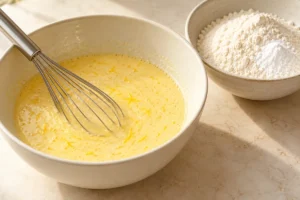
Whisk eggs and sugar until evenly combined. Whisk in yogurt, oil, lemon juice and zest. The mixture should be cohesive rather than streaked with yogurt. There is no need to whip it like a sponge cake.
3. Fold in the flour
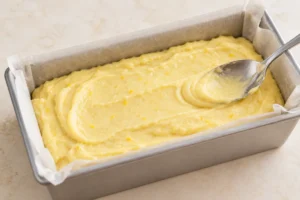
Stir the dry ingredients together, then fold them into the wet mixture just until no dry flour remains. Scrape the bowl bottom to catch hidden flour. Pour into the prepared tin and smooth the surface. Avoid extended beating after flour is added, which can toughen the crumb.
4. Bake and cool
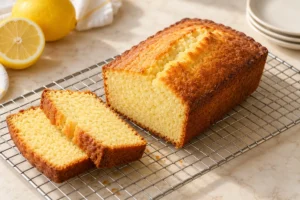
Bake for about 45–55 minutes until a skewer inserted into the center comes out without wet batter. A few moist crumbs are acceptable; a coating of raw batter is not. If the top colors early, loosely shield it with foil and continue baking. Cool in the tin for ten minutes, then lift onto a rack and allow to cool before slicing.

Lemon Yogurt Loaf Cake
Equipment
- 1 23 ×13 cm loaf tin, mixing bowls and cooling rack
Ingredients
- 200 g plain all-purpose flour
- 150 g sugar
- 2 large eggs
- 150 g plain yogurt
- 80 ml neutral oil
- 2 tablespoons lemon juice
- 1 tablespoon finely grated lemon zest yellow surface only
- 2 teaspoons baking powder
- 1/4 teaspoon fine salt
Instructions
- Heat the oven to175°C (350°F). Line a23 ×13 cm loaf tin with parchment and lightly grease exposed ends if needed. Measure flour, baking powder and salt separately.
- Whisk eggs and sugar until combined. Whisk in yogurt, oil, lemon juice and zest until the mixture is cohesive without yogurt streaks.
- Stir dry ingredients together and fold into wet mixture just until no dry flour remains. Scrape the bowl bottom without prolonged beating. Pour into prepared tin and smooth the top.
- Bake for45–55 minutes until a skewer in the center comes out without wet batter. Shield the top loosely with foil if it colors early. Cool in the tin for10 minutes, then lift to a rack and allow approximately50 more minutes or until cool enough for neat slicing.
Notes
Common texture problems
A sunken center can result from removing the loaf before it is fully baked or using an unsuitable pan size. Test the middle, not a corner close to the hot metal. Opening the oven repeatedly early in baking also disrupts heat, so wait until the loaf is approaching the stated checking window.
A dense gummy line can come from underbaking or cutting while very hot. The loaf continues to settle during cooling. Do not mistake steam and softness in a hot slice for the final cooled texture.
A tough crumb can reflect overmixing after adding flour. Fold only enough to combine. If the batter contains flour lumps, stir the dry ingredients beforehand and scrape the bowl rather than aggressively beating the completed mixture.
Allergens and substitutions
This recipe contains wheat, eggs and milk through yogurt. A plain dairy-free yogurt is a possible variation, but its fat, water and acidity differ by product. It does not remove the egg or wheat allergens. An egg-free or gluten-free loaf needs a separately developed formulation.
There are no berries, nuts or icing in the standard loaf. If serving with extras, identify them clearly instead of making the recipe card disagree with the article. Do not add substantially more lemon juice to strengthen the flavor; additional liquid changes the batter balance.
Serving and related recipes
Cut once cooled enough for neat slices. For a smaller buttery lemon bake, see lemon butter shortbread squares. For a breakfast with lemon and dairy, lemon ricotta pancakes use a stovetop method rather than loaf baking.
Storage and freezing
Cool the plain loaf before wrapping so trapped steam does not make the surface wet. For this moist yogurt loaf, refrigerate in a covered container and use within 3–4 days. Bring an individual slice out briefly for serving if preferred, rather than leaving the entire loaf in a warm room.
Freeze safely cooled slices with parchment between them in a sealed container. Thaw while covered under refrigeration to help limit drying. Freezing changes texture slightly and does not repair unsafe handling before freezing. See USDA leftovers guidance for general food-storage principles.
Common questions
Can I use a smaller loaf tin?
The batter will be deeper and may not fit. Use the stated approximate dimensions for the intended method and timing.
Does the loaf need icing?
No. The standard recipe is an uniced lemon loaf. Icing would be a separate optional addition.
Why use both zest and juice?
They contribute different flavors: zest supplies aromatic oils, while juice contributes acidity.
Can I slice it straight from the oven?
It is easier to cut once cooled, and cooling lets the crumb settle. The stated total time includes a practical cooling allowance, not instant serving.
Images are generated illustrations. No personal kitchen test, fabricated review or nutritional analysis is claimed.