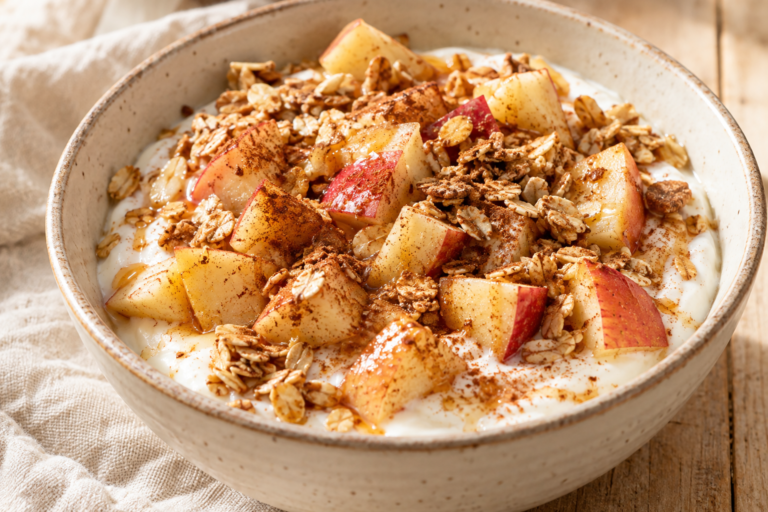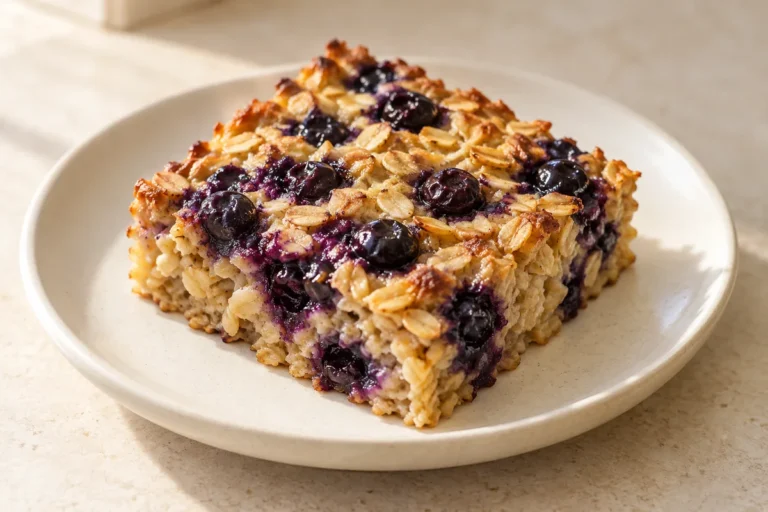

Spinach and Mushroom Egg Muffins
Spinach and mushroom egg muffins turn a simple egg mixture into small savory breakfast portions. Their main challenge is moisture: mushrooms and spinach contain water, and adding them raw can leave a wet center. Cook the vegetables first, let them cool slightly and then combine them with the eggs.
This version makes twelve small muffins from six eggs and vegetables. They are not oversized café muffins or a cheese-filled quiche. Two or three can be served as part of a breakfast, depending on the accompaniments and appetite. The recipe card states twelve pieces rather than inventing a nutritional serving claim.
Ingredients and equipment
Measure six large eggs, 200 g brown mushrooms, 100 g baby spinach, 1 tablespoon olive oil, 2 tablespoons milk, 1/4 teaspoon fine salt and 1/4 teaspoon black pepper. Chop mushrooms fairly small so the pieces divide evenly between the cups. Wash and thoroughly drain the spinach; roughly chop larger leaves.
Use a twelve-cup muffin pan. A well-greased nonstick or silicone pan can make release easier, but no pan is guaranteed not to stick. Grease the sides and base of every cup with part of the measured oil. Ordinary paper liners can cling tightly to baked eggs, so they are not the first choice for this recipe.
Milk loosens the eggs slightly without creating a large amount of liquid. There is no cheese in the standard version. If adding cheese, acknowledge it as a variation that changes the seasoning and allergen profile rather than treating it as an unlisted ingredient.
Four cooking stages
1. Chop and prepare
Heat the oven to 180°C (350°F). Clean and chop the mushrooms, wash and drain the spinach, and prepare the muffin pan. Reserve about a teaspoon of the oil for greasing and use the rest for the skillet.
2. Cook off vegetable moisture
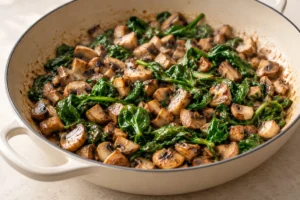
Heat the remaining oil in a skillet over medium heat. Cook the mushrooms for about six minutes, stirring, until they release moisture and most of that liquid evaporates. Add spinach and cook for one to two minutes until wilted. If liquid remains pooled in the skillet, continue briefly or drain it before mixing with eggs.
3. Combine with eggs
Let the vegetables cool for a few minutes so they are warm rather than sizzling. Whisk eggs with milk, salt and pepper. Stir in the vegetables. Divide the mixture among twelve greased cups, distributing mushroom pieces with a spoon rather than pouring all the solids into the first few cups.
4. Bake until fully set
Bake for about 18–22 minutes until the centers are set and the egg mixture reaches 160°F (71°C). A browned edge alone does not establish that the center is cooked. Allow a short cooling period before gently loosening each muffin. Egg muffins puff in the oven and settle as they cool; that is normal.

Spinach and Mushroom Egg Muffins
Equipment
- 1 Twelve-cup muffin pan, skillet and mixing bowl
Ingredients
- 6 large eggs
- 200 g brown mushrooms cleaned and finely chopped
- 100 g baby spinach washed, drained and chopped
- 1 tablespoon olive oil reserve about1 teaspoon for greasing
- 2 tablespoons milk
- 1/4 teaspoon fine salt
- 1/4 teaspoon black pepper
Instructions
- Heat the oven to180°C (350°F). Clean and chop mushrooms and wash and drain spinach. Grease all twelve muffin cups with about1 teaspoon of the measured oil.
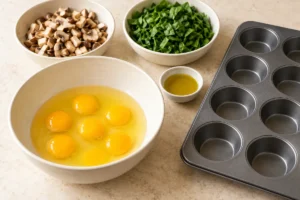
- Heat the remaining oil in a skillet over medium heat. Cook mushrooms for about6 minutes until most released liquid evaporates. Add spinach and cook for1–2 minutes until wilted. Drain any pooled liquid and let vegetables cool briefly.
- Whisk eggs, milk, salt and pepper. Stir in the warm, not sizzling, vegetables. Divide evenly among the twelve cups, distributing vegetable pieces rather than pouring all solids into the first cups.

- Bake for about18–22 minutes until centers are fully set and the egg mixture reaches160°F (71°C). Allow a short cooling period, then gently loosen and remove. A little settling after baking is normal.

Notes
Why egg muffins become wet or rubbery
A wet bottom often reflects liquid trapped in the vegetables. Pre-cooking them is more effective than simply extending the oven time, which can toughen the surrounding egg. Chop evenly, cook off moisture and avoid adding dripping wet spinach to the skillet.
Rubbery edges can result from overbaking. Start checking at the early end of the stated range, particularly with dark metal pans. Use the center temperature and set texture together. Do not undercook the eggs in pursuit of a softer texture.
Sticking can come from insufficient greasing or removing the muffins while fragile. Give them a few minutes to settle, then use a small flexible spatula around the edges. Avoid scratching a coated pan with a sharp knife.
Substitutions and allergens
The recipe contains eggs and milk. An unsweetened milk alternative can replace the small milk quantity, but it does not remove the egg allergen. This is not an egg-free baking formula. Check the oil and any optional seasonings for relevant labels.
White mushrooms can replace brown mushrooms. Thawed frozen spinach can work only after squeezing out excess liquid; weigh the drained amount and distribute it carefully. Adding raw frozen spinach directly changes the moisture balance.
Serving ideas
Serve warm with toast or a vegetable side. For a different stovetop egg breakfast, try soft scrambled eggs on toast. A spinach and feta breakfast wrap uses spinach in a handheld meal. Confirm those dishes' ingredients if avoiding dairy.
Chilling, freezing and reheating
Refrigerate promptly in shallow covered containers at 40°F (4°C) or below. Use within 3–4 days. For freezing, cool safely, freeze individual pieces and transfer to a sealed freezer container; expect a slightly different texture after reheating.
Reheat leftovers thoroughly to 165°F (74°C). A microwave can warm them unevenly, so check the center rather than relying only on a hot outer surface. Do not leave cooked egg portions unrefrigerated for extended periods. See USDA leftovers guidance for chilling and reheating principles.
Common questions
Why did the muffins shrink?
Eggs trap steam and expand while baking, then settle as they cool. A modest reduction in height is expected.
Can I use raw mushrooms?
Pre-cooking is recommended here to remove water and create a more even texture. Raw mushrooms change the method.
Can I fill only six cups?
That makes larger muffins and changes the cooking time. Do not assume the twelve-small-muffin timing still applies.
Are browned edges enough to check doneness?
No. The centers must be fully set, with the egg mixture reaching 160°F (71°C).
Images are generated method illustrations, not photographs of a personal kitchen test. No testing claim or invented nutritional figures are provided.