Banana Oat Blender Pancakes
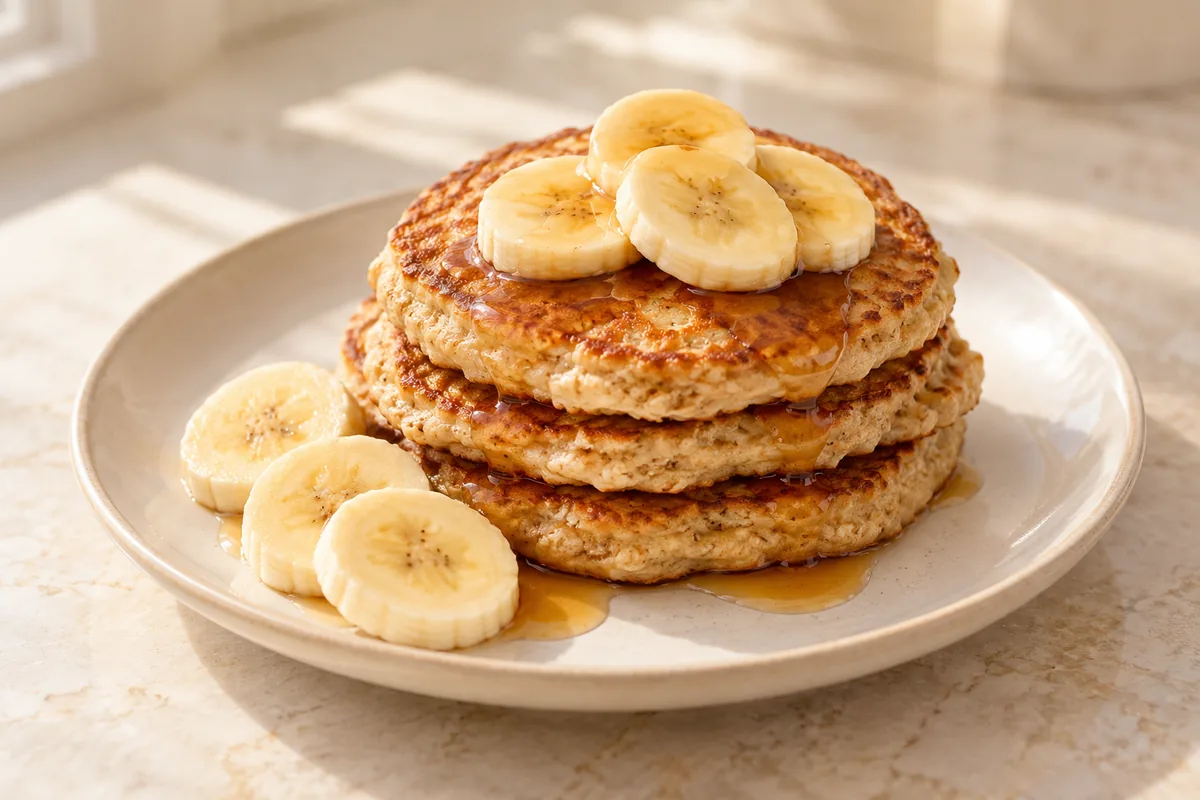
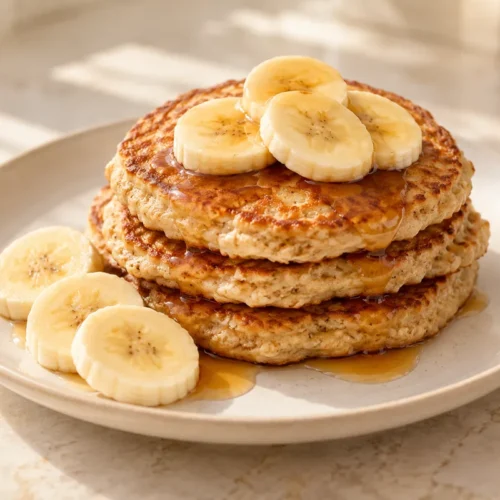
Banana oat blender pancakes use rolled oats instead of a flour-based batter. A ripe banana provides sweetness and body, while eggs help the small pancakes hold together. The batter needs a short rest after blending so the oats absorb liquid before they reach the skillet.
These pancakes are soft and a little more delicate than ordinary wheat pancakes. Make them small, cook over moderate heat and wait until the underside is set before turning. A dark outside with a wet center usually means the skillet is too hot, not that the batter needs more sugar.
Ingredients and consistency
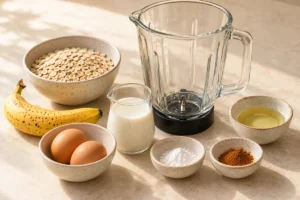
For about eight small pancakes, measure 120 g rolled oats, one ripe banana weighing about 120 g without its peel, two large eggs, 100 ml milk, 1 teaspoon baking powder, 1/2 teaspoon cinnamon and 2 teaspoons neutral oil for the skillet.
Banana size matters: a very large banana adds more moisture and changes how the pancakes set. Weighing the peeled fruit is more reliable than assuming every banana is alike. Use yellow fruit with some brown speckles rather than a hard green banana.
Rolled oats should be blended until the batter is mostly smooth. It does not need the identical texture of refined flour batter. Milk brands and banana ripeness affect thickness, so keep a little extra milk available for a measured adjustment after resting.
Four stages for easy flipping
1. Measure before blending
Peel and weigh the banana. Add oats, banana, eggs, milk, baking powder and cinnamon to a blender. Keep the skillet oil separate. Check the blender manufacturer's instructions for suitable quantities and operation.
2. Blend and rest
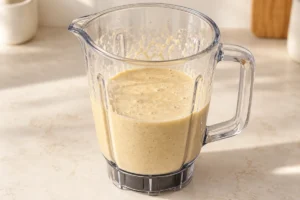
Blend until the oats are finely broken down and the mixture is mostly smooth. Let the batter stand for five minutes. It should pour slowly rather than run like milk. If very stiff, add a tablespoon of milk and blend briefly; avoid adding a large splash without checking.
3. Cook small pancakes
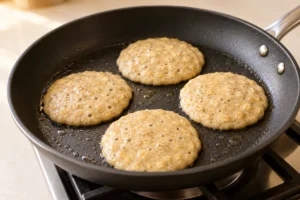
Heat a nonstick skillet over medium-low to medium heat and lightly coat with some of the measured oil. Use about two tablespoons of batter per pancake and leave space for a spatula. Cook for roughly two to three minutes until the edges begin to look set and bubbles appear. Do not move the pancake repeatedly while its base is forming.
4. Turn and finish
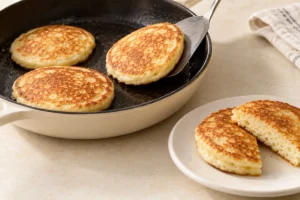
Slide a broad spatula fully underneath and turn once. Cook the second side for about one to two minutes until the center is set and the egg mixture reaches 160°F (71°C). Check a first pancake to judge the skillet heat. Repeat in batches, adding only enough oil to prevent sticking.
Banana Oat Blender Pancakes
Equipment
- 1 Blender, nonstick skillet and wide spatula
Ingredients
- 120 g rolled oats
- 1 ripe banana about120 g without peel
- 2 large eggs
- 100 ml milk plus a little if batter needs adjusting
- 1 teaspoon baking powder
- 1/2 teaspoon ground cinnamon
- 2 teaspoons neutral oil divided between batches
Instructions
- Peel and weigh the banana. Measure oats, eggs, milk, baking powder and cinnamon into a blender. Keep the skillet oil separate.
- Blend until oats are finely broken down and batter is mostly smooth. Rest for5 minutes. If very stiff, blend in a tablespoon of milk; batter should pour slowly, not run like milk.
- Heat a lightly oiled nonstick skillet over medium-low to medium heat. Use about2 tablespoons batter for each small pancake. Cook for roughly2–3 minutes until edges set and bubbles appear, leaving space for turning.
- Turn with a wide spatula and cook for about1–2 minutes more until the center is set and the egg mixture reaches160°F (71°C). Lower heat if outsides brown early. Repeat in batches with the remaining oil.
Notes
Troubleshooting
If a pancake breaks during turning, it may be too large, the underside may not be set or the batter may be too thin. Small pancakes are easier to manage. Let the batter rest before deciding whether it needs adjustment.
If the outside browns too quickly, lower the heat and allow the skillet to cool slightly between batches. Banana sugars color readily, so a high heat that works for another pancake recipe may be unsuitable here. Do not serve a raw center because the outer surface looks finished.
If the batter thickens while you cook, stir in milk a teaspoon or tablespoon at a time. Oats continue absorbing liquid during the batches. Conversely, thin batter should be allowed to settle before adding more dry oats and changing the recipe balance.
Allergens and substitutions
The standard recipe contains eggs and milk. An unsweetened milk alternative can replace dairy milk, but removing the eggs requires another formulation. Use certified gluten-free oats if needed and check all labels, including baking powder.
Maple syrup and extra banana can be offered at the table, but they are optional accompaniments. No berries, nuts or chocolate are required. Avoid calling the recipe allergy-safe merely because wheat flour is absent; individual ingredient sourcing and cross-contact still matter.
Serving and related recipes
Serve promptly with fruit or a little syrup if desired. For a different pancake texture, see lemon ricotta pancakes. A warm banana cinnamon porridge uses oats without blender cooking. Use each dish's own quantities rather than moving the pancake ratio directly to porridge.
Storage and reheating
Refrigerate cooked pancakes promptly in a shallow covered container at 40°F (4°C) or below and use within 3–4 days. Freeze safely cooled pancakes separated with parchment so individual pieces can be removed. They may be softer after reheating than fresh pancakes.
Reheat leftovers throughout to 165°F (74°C). A microwave is convenient but can heat unevenly; check the center. An oven or skillet can restore some surface texture while the center warms. Do not save raw egg batter at room temperature during a long breakfast service. USDA leftovers guidance covers prompt chilling and safe reheating.
Common questions
Can I skip the blender?
Use finely ground oat flour rather than whole rolled oats, but expect a different mixing method and assess the batter carefully. Whole oats stirred into the wet ingredients do not produce the same pancakes.
Why rest the batter?
The oats need time to absorb liquid. The five-minute rest gives a more predictable consistency before cooking.
Can I make large pancakes?
They are harder to flip and cook evenly. Small pancakes are recommended for this soft batter.
Does browning prove the center is cooked?
No. Check that the center is set and the egg mixture reaches 160°F (71°C).
Images are generated illustrations of the method, not photographs from a personal kitchen test. No such testing claim is made.