Peanut Noodles with Cabbage and Carrot
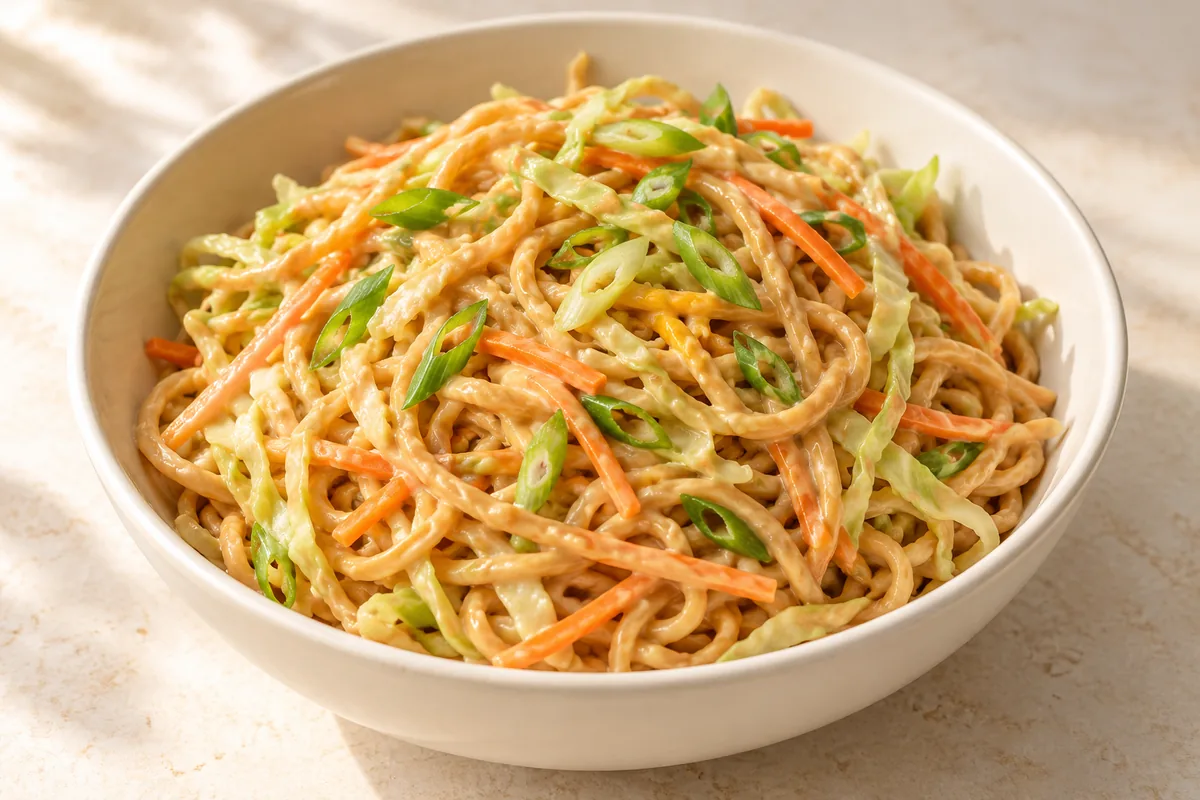
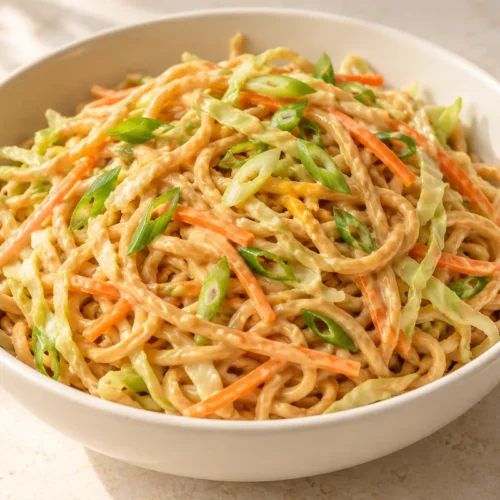
Peanut noodles with cabbage and carrot combine warm wheat noodles with a tangy peanut-lime dressing and finely cut vegetables. The sauce is whisked separately, so you can adjust its thickness before it touches the noodles. Briefly wilting the cabbage with the draining water softens its edges while leaving a little crunch.
This is a flexible weeknight bowl, not a claim of an authentic regional dish. The important details are practical: drain the noodles well, loosen the dressing gradually and toss while the noodles are still warm. The printable card contains all quantities and four illustrated cooking stages.
Ingredients and why they matter
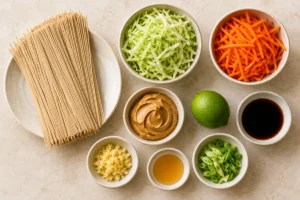
Use 200 g dry wheat noodles, 150 g finely shredded green cabbage, 100 g carrot cut into thin matchsticks and two sliced spring onions. The dressing uses 60 g smooth peanut butter, two tablespoons reduced-salt soy sauce, two tablespoons lime juice, one teaspoon finely grated ginger, one teaspoon honey and 60–90 ml warm water.
Choose noodles that cook in roughly 6–8 minutes for the stated 25-minute total. Follow the package if yours differ. Thick udon and very fine rice noodles have different liquid uptake and cooking times; they are substitutions, not identical ingredients. Cut the carrot thinly enough to eat comfortably without cooking. A vegetable peeler can make ribbons if matchsticks are awkward.
Stir separated natural peanut butter in its jar before measuring. Otherwise a scoop from the dry bottom can make the dressing unusually stiff. Reduced-salt soy sauce provides seasoning without making the bowl excessively salty; even reduced-salt products vary. Lime gives acidity, while a small amount of honey rounds it out without turning this into a sweet sauce.
Four stages for a better noodle bowl
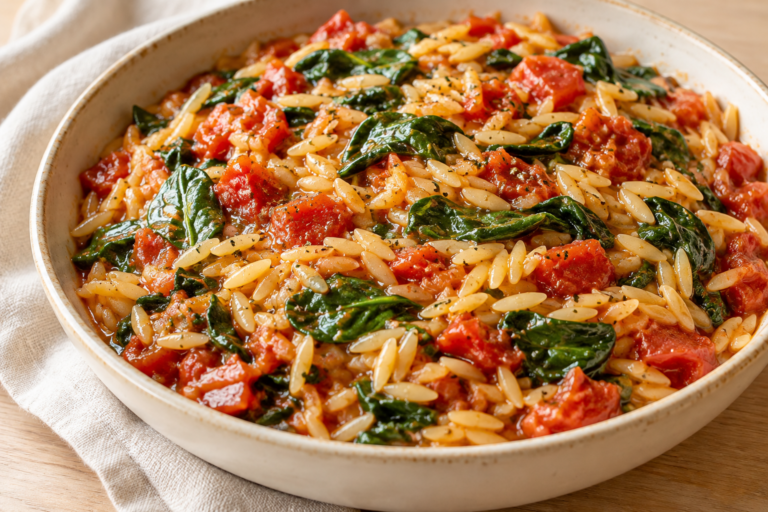
1. Prepare the vegetables
Shred the cabbage finely and put it in a colander in the sink. Keep the carrot and spring onion separate. Bring a large saucepan of water to the boil while you measure the sauce ingredients. A broad mixing bowl makes the final toss easier than a narrow serving bowl.
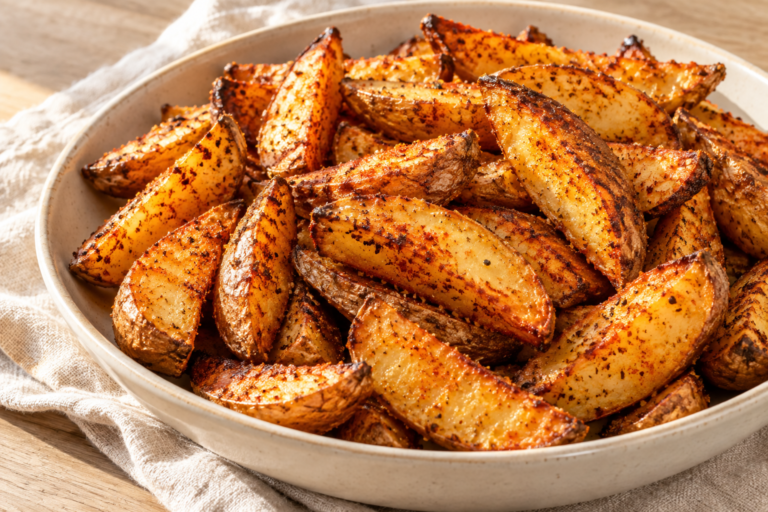
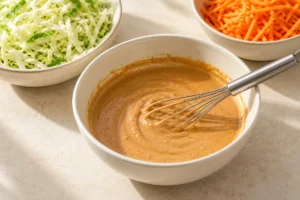
2. Whisk a pourable sauce
Whisk peanut butter, soy sauce, lime juice, ginger and honey, then add warm water a little at a time. The mixture may initially thicken when the liquid hits it; continue stirring before adding more. Stop when it pours in a thick ribbon rather than dropping in lumps. Save a little water for the final adjustment.
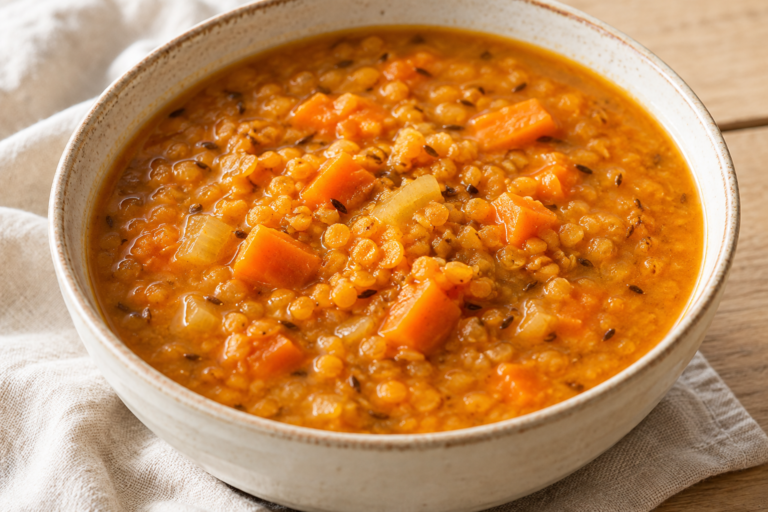
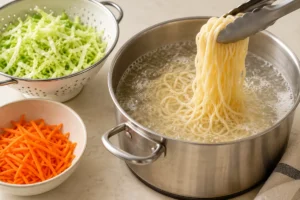
3. Cook and drain
Cook the noodles according to their package, tasting one near the end. Drain them over the cabbage so the hot water lightly wilts it. Let the colander drain thoroughly; trapped water dilutes the dressing. The carrot stays raw and crisp. Do not leave the noodles sitting in a hot empty saucepan, where they can stick into a block.
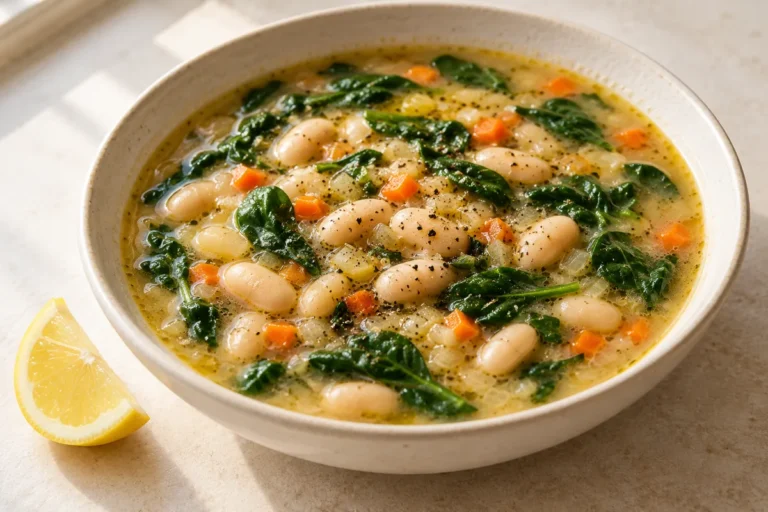
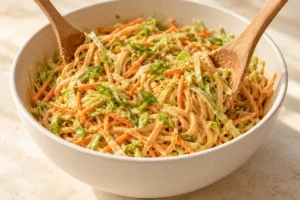
4. Toss while warm
Transfer noodles and cabbage to the mixing bowl. Add carrot and sauce, then use two spoons or tongs to lift and fold rather than stir aggressively. Add the spring onion and enough remaining warm water to make the sauce coat the strands. Serve promptly; the dressing thickens as it cools.
Texture fixes and substitutions
If the bowl is sticky, add a tablespoon of warm water and toss again before adding extra peanut butter. If it is watery, check for drainage liquid at the bottom; adding more salt will not fix dilution. A very sharp sauce usually needs a little more peanut butter or a small touch of honey, not a large amount of sweetener.
For a peanut-free variation, use a smooth sunflower-seed butter that is suitable for your allergy needs; its flavor is different and cross-contact still matters. The standard recipe contains peanuts, wheat and soy. Wheat noodles may also contain egg. Gluten-free noodles and certified gluten-free tamari can make a different version, but check every label. Maple syrup can replace honey if desired.
Serving and related recipes
The two portions make a substantial vegetable noodle meal. For a separate crisp side, try cucumber tomato salad with lemon dressing. For another simple noodle-style dinner without a peanut dressing, see garlic mushroom pasta. A hot, creamier pantry option is coconut chickpea and spinach curry.
Storage and reheating
For advance preparation, keep dressing and raw vegetables separate from cooked noodles until serving. Refrigerate cooked leftovers promptly in shallow covered containers. Use within 3–4 days at 40°F (4°C) or below, following USDA leftover guidance. Do not leave perishable food out longer than two hours, or one hour above 90°F (32°C).
Reheat with a splash of water, stirring gently, until the cooked leftovers reach 165°F (74°C) throughout. The vegetables become softer. Freezing is not recommended for the assembled bowl because cabbage and carrot lose their crunch and the sauce can separate. Make a smaller batch instead of promising the same texture after freezing.
Frequently asked questions
Can I eat these noodles cold?
Yes, after safe chilling. Let a refrigerated portion loosen with a small splash of water and toss before serving. Do not leave it at room temperature for a long warm-up.
Why does peanut sauce seize when I add lime?
Peanut butter often becomes thick before it loosens as more liquid is incorporated. Whisk thoroughly and add warm water gradually; do not assume the sauce has failed.
Can I use spaghetti?
Yes. Cook it according to its package and drain well. The flavor works, although the texture and cooking time will differ from wheat noodles.
Is the cabbage cooked?
Only lightly wilted by the draining water. If you prefer it softer, add it to the saucepan for the last minute of noodle cooking, then drain both together.
Printable recipe
Peanut Noodles with Cabbage and Carrot
Equipment
- 1 Large saucepan, colander and mixing bowl
Ingredients
- 200 g wheat noodles check package cooking time
- 150 g cabbage finely shredded
- 100 g carrot cut into thin matchsticks
- 2 spring onions thinly sliced
- 60 g smooth peanut butter
- 2 tablespoons reduced-salt soy sauce
- 2 tablespoons lime juice
- 1 teaspoon fresh ginger finely grated
- 1 teaspoon honey
- 60 ml warm water plus up to 30 ml to adjust
Instructions
- Finely shred the cabbage and place it in a clean colander. Cut the carrot into thin matchsticks and slice the spring onions. Measure the sauce ingredients. Bring a large saucepan of water to a boil for the noodles.
- Whisk the peanut butter, soy sauce, lime juice, ginger and honey in a mixing bowl. Gradually whisk in 60 ml warm water until smooth and pourable. If stiff, add warm water a teaspoon at a time.
- Cook the noodles according to their package instructions, usually 6–8 minutes. Carefully drain them over the cabbage in the colander so the hot water lightly softens it. Shake well to drain excess water.
- Add the drained noodles and cabbage to the peanut sauce with the carrot. Toss thoroughly. Loosen with a little extra warm water only if needed, scatter over the spring onions and serve promptly.
Notes
Images are generated illustrations of the method. This recipe is editorial guidance, not a documented personal kitchen test. Read our recipe policy for substitutions, allergens and corrections.