Cottage Cheese Flatbread Without Flour
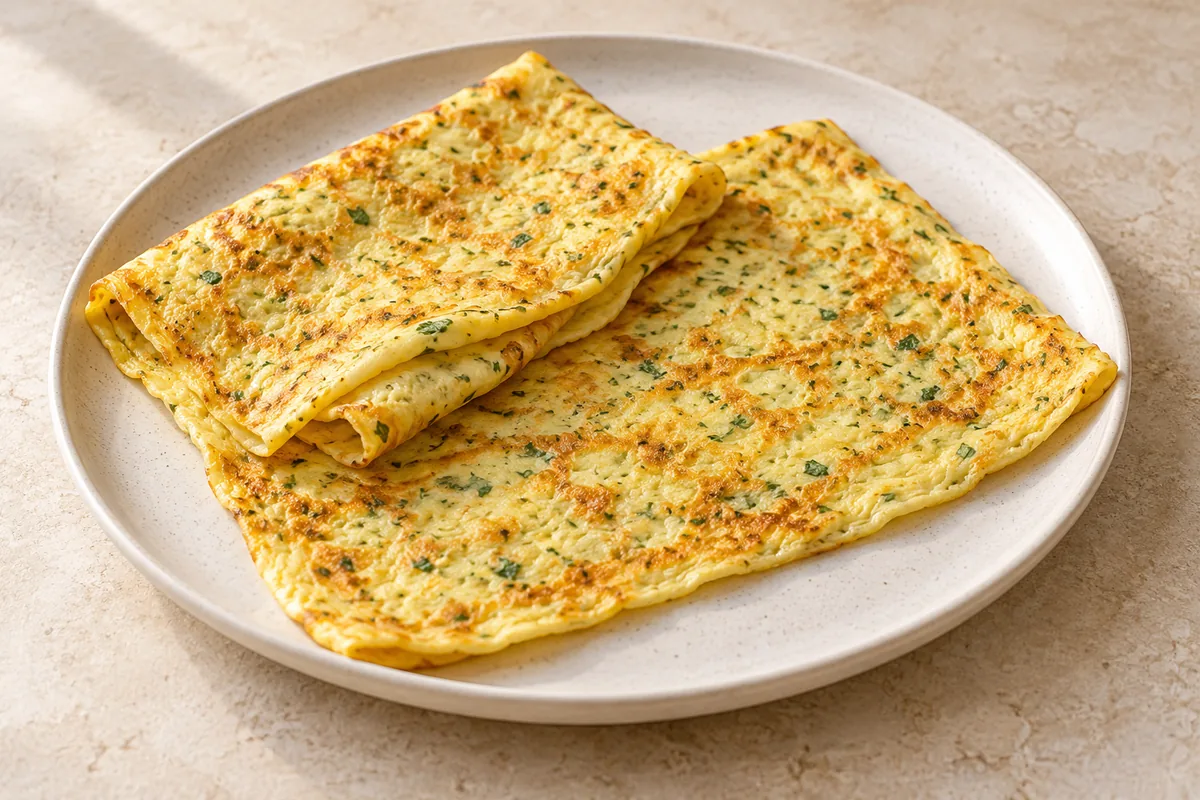
This cottage cheese flatbread contains no flour: blended cottage cheese and eggs bake into a thin, flexible sheet that can be folded around a filling. It is best understood as an egg-based wrap rather than a chewy naan or a risen loaf. A little garlic and oregano make it savory without requiring a long ingredient list.
The process takes about 10 minutes to prepare, around 35 minutes to bake and 10 minutes to cool before peeling. That cooling period is part of the recipe, not an optional delay. Pulling a hot, delicate sheet off its paper is a common way to tear it.
Which cottage cheese to use
Start with 250 g, about 1 cup, of plain cottage cheese and two large eggs. Whole-milk cottage cheese is a useful starting point for the texture in this recipe, but the amount of liquid varies between brands. If watery whey is pooling on top, tip off that loose liquid or let the cheese sit briefly in a fine sieve. Do not squeeze it into dry curds; just remove the obvious excess.
Check the ingredient list for allergens and any gelatin source that does not fit your dietary needs. Milk and eggs are the main ingredients, so this is not a dairy-free or egg-free bread. This page does not supply calculated protein totals, a keto promise or a verified gluten-free certification. The no-flour description is simply a statement about the ingredients used here.
Paper, pan and thickness
Use a rimmed baking sheet with baking parchment rated for the oven temperature. Wax paper is not the same material and should not be substituted. Brush the parchment lightly with the measured teaspoon of oil. A clean 20-by-30 cm rectangle, roughly 8 by 12 inches, gives a useful starting area for this quantity of batter.
Aim for a reasonably even sheet, about 5 mm thick, rather than a translucent edge around a thick puddle. Spreading farther produces a more fragile wrap; leaving the batter in a small area can create a wet middle. The appearance of the batter and its eventual set matter more than perfectly sharp corners.
How to make cottage cheese flatbread without flour
1. Blend until the curds disappear
Heat the oven to 350°F, or 175°C. Blend the cottage cheese, eggs, garlic powder, oregano and black pepper until smooth. Pause and scrape down the jar if needed. Do not add milk to make blending easier: the mixture already contains enough moisture, and extra liquid changes the bake.
2. Spread an even rectangle
Pour onto the prepared parchment and spread with a spatula to the suggested dimensions. Move batter from thick spots toward thin areas. Keep the paper inside the tray and away from the heating elements. A light tap of the tray can help settle larger bubbles without thinning the batter further.
3. Bake until fully set
Bake on the middle rack for about 30 to 35 minutes. Begin checking near 28 minutes if your oven runs hot. The surface should look dry and set, with golden patches and lightly colored edges, not a pale wet pool in the middle. For an egg dish, the safe internal target is 160°F, or 71°C; use a suitable thin probe in the center when practical. USDA temperature guidance explains the egg target.
4. Cool before peeling and folding
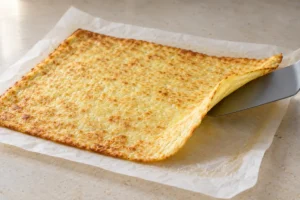
Leave the sheet on its tray for 10 minutes, then carefully loosen an edge with a spatula and peel it from the parchment. Cut into two portions. If it is sticking or tearing, stop pulling, let it cool a little longer and work from another edge. Never scrape a still-wet middle free and treat it as a finished wrap.
Cottage Cheese Flatbread Without Flour
Equipment
- 1 Blender, rimmed baking sheet, oven-rated baking parchment and spatula
Ingredients
- 250 g plain whole-milk cottage cheese about 1 cup; drain only obvious pooled whey; check gelatin source if present
- 2 large eggs
- 1/2 teaspoon garlic powder
- 1/2 teaspoon dried oregano
- 1/8 teaspoon black pepper
- 1 teaspoon olive oil for brushing the baking parchment
Instructions
- Heat the oven to 350°F (175°C). Remove obvious pooled whey from cottage cheese. Blend cottage cheese, eggs, garlic powder, oregano and black pepper until smooth, scraping the jar if needed. Do not add milk or flour.

- Line a rimmed sheet with oven-rated baking parchment, not wax paper, and brush with the olive oil. Spread batter into an even rectangle about 20 by 30 cm (8 by 12 inches), approximately 5 mm thick, avoiding very thin edges.
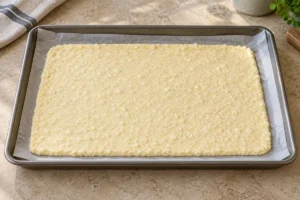
- Bake on the middle rack for about 30 to 35 minutes, checking from 28 minutes. The surface must be fully set and dry with golden patches, not a wet center. Egg dishes should reach 160°F (71°C); use a suitable thin probe when practical.
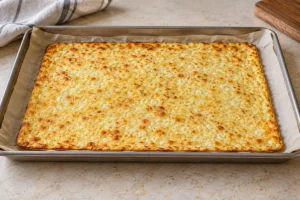
- Cool on the tray for 10 minutes. Loosen an edge carefully and peel from the parchment, then cut into 2 portions and fold gently. If sticking or tearing, allow more cooling and work slowly. Fillings are optional and not included.
Notes
Troubleshooting a wet or brittle flatbread
A wet center can result from excess whey, a small spreading area or insufficient baking. Note the brand and rectangle dimensions before changing the ingredient ratio. It is better to correct those variables than to add an unmeasured amount of flour and still describe the recipe as flourless.
A brittle sheet may be too thin or overbaked at the edges. Fold gently rather than creasing sharply, and use a modest amount of filling. The surface will not be identical to a wheat tortilla: expect a tender, slightly egg-like wrap with a delicate structure.
Filling ideas and related recipes
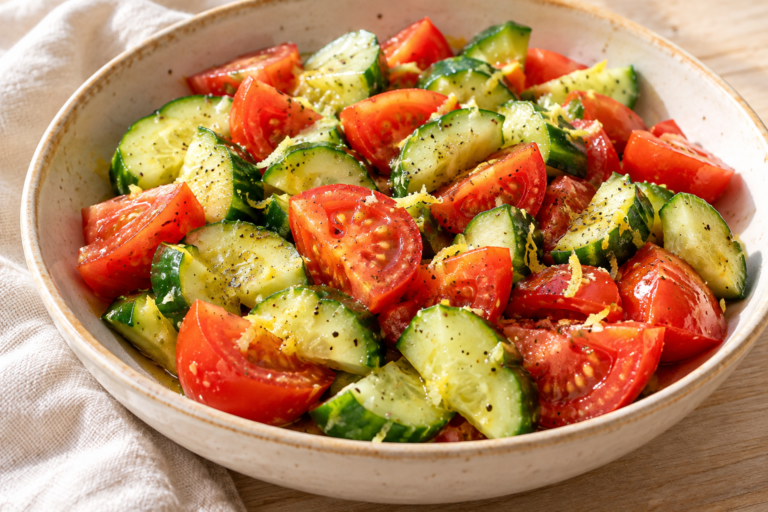
Try a little hummus, drained cucumber and tomato, or cooked chicken with greens. Avoid very wet fillings and let hot fillings cool slightly so they do not steam the wrap. The filling is not included in the card ingredients, timing or serving calculation. For a traditional tortilla-based option, see spinach and feta breakfast wraps. A fresh cucumber tomato salad works on the side.
Storage
Store unfilled portions in a covered container in the refrigerator with parchment between them. Keep at 40°F, or 4°C, or colder and use within 3 to 4 days. Refrigerate within 2 hours of preparation, or 1 hour above 90°F. Add fillings just before serving. See USDA leftover handling.
Frequently asked questions
Can I leave out the eggs?
Not in this method. The eggs help the blended mixture set into a sheet. A cottage-cheese-and-flour flatbread is a different dough and needs its own proportions and cooking instructions.
Will low-fat cottage cheese work exactly the same?
Not necessarily. Fat content and free liquid both affect the texture. If changing brands or fat level, keep the rectangle size consistent, remove pooled whey and judge the final set instead of assuming the same minute count will work.
Contains milk and eggs. Illustrations show the intended stages, not evidence of physical kitchen testing. No pork or pork-derived ingredient is used.