Butternut Squash Soup with Cottage Cheese
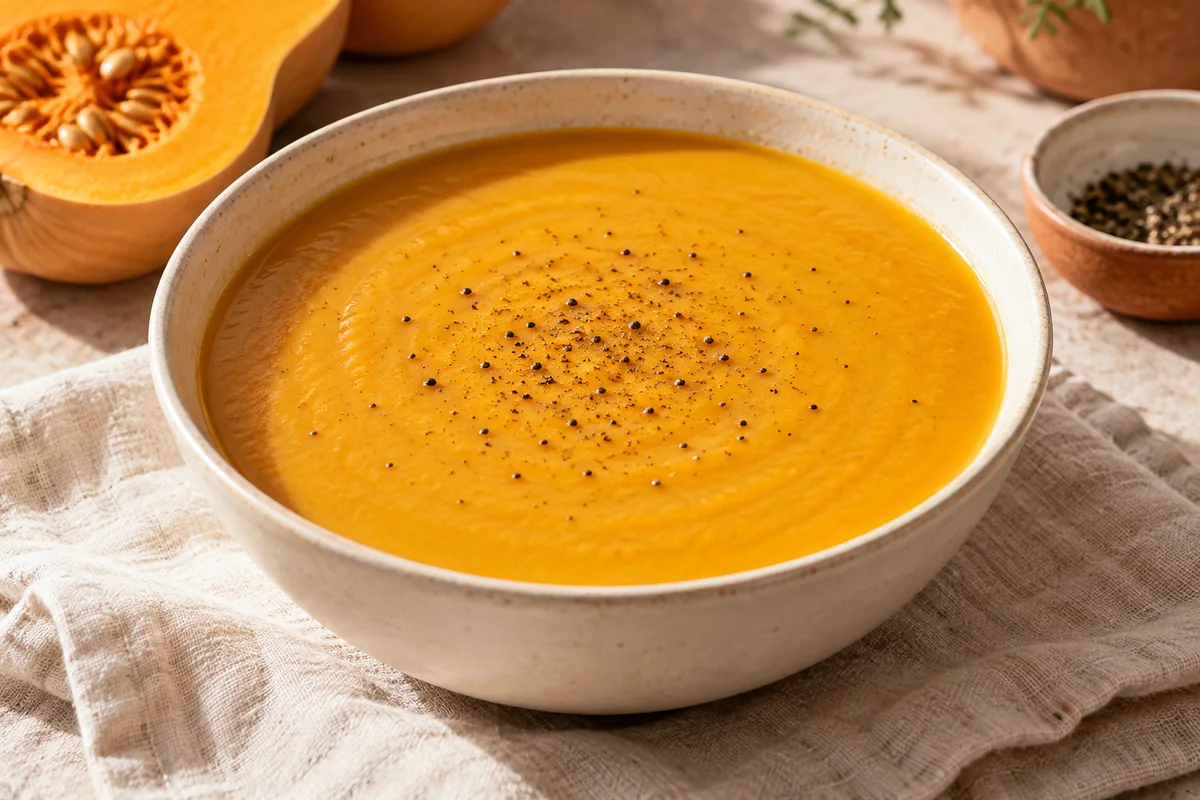
Butternut cottage cheese soup uses a tender squash base and blended cottage cheese for a smooth bowl without heavy cream. The dairy is added after the vegetables soften, making both texture and gentle reheating easier to control.
Ingredients for butternut cottage cheese soup
The ingredient weight is peeled and seeded squash rather than the weight of a whole squash at the store. Pre-cut cubes are convenient, but check that they are similar in size. Plain vegetable broth keeps this meat-free; taste before adding more salt. Cottage cheese contributes a mild tang and creaminess but must be blended thoroughly. Dried sage is measured more sparingly than a large handful of fresh leaves, and lemon juice goes in at the end to brighten rather than sour the bowl.
The complete measured ingredient list is in the printable recipe card below. Measure before starting, and keep ingredients that are reserved for finishing separate from those used during cooking.
How to make butternut squash soup with cottage cheese

Step 1
Heat oil in a large pot over medium heat. Add onion and cook 5 minutes until softened. Add garlic and sage and stir for 30 seconds without letting the garlic darken.
Step 2
Add squash cubes, broth, salt and pepper. Bring to a gentle simmer, partly cover and cook 25–30 minutes until a fork easily breaks a squash cube.
Step 3
Remove from heat and let the strongest bubbling stop. Blend the squash and broth until smooth. For a countertop blender, work in small batches with a vented lid according to its instructions; never seal hot liquid in a smoothie cup.
Step 4
Blend in cottage cheese until no white curds remain. Return to low heat only if needed, stir in lemon juice and thin with broth a tablespoon at a time. Warm without boiling and taste for seasoning.
Practical tips and troubleshooting
If the squash is still firm, simmer longer before blending; a blender does not turn undercooked fibers into a silky soup. A very deep pot can hide pieces above an immersion blender blade, so move the blade slowly while keeping it submerged. Bring the soup back only to a gentle heat after adding cheese. A rolling boil can break the dairy texture. Adjust liquid after blending, because the thickness is harder to judge while the cubes are intact.
Frequently asked questions
Can I use frozen butternut squash?
Yes, with no need to thaw. Start checking tenderness earlier if the pieces are small and adjust liquid after blending.
Is it a high-protein recipe?
It contains cottage cheese, but no calculated nutrition or protein claim is provided here. The amount per serving depends on brands and portions.
Can I freeze it?
For the best texture, freeze the cooked squash-broth base before adding cottage cheese. Blend in fresh cottage cheese after thawing and warming.
Serving and related recipes
Try lemon white bean soup, yogurt flatbread no yeast, air fryer acorn squash slices. These links lead to different preparation methods or complementary dishes, rather than a second version of this recipe.
Storage and reheating
Refrigerate perishable leftovers promptly in shallow covered containers, within 2 hours of preparation or serving. Keep dairy toppings separate when the method calls for it. For cooked savory dishes, use refrigerated leftovers within 3–4 days and reheat to 165°F (74°C). These times are conservative storage guidance, not a shelf-life guarantee. Discard food with signs of spoilage; a normal smell does not prove that mishandled food is safe.
For poultry or ground-beef safety, consult the USDA safe temperature chart. A thermometer is more reliable than the color of meat or its juices.
Printable recipe

Butternut Squash Soup with Cottage Cheese
Equipment
- 1 Large pot and immersion blender or vented countertop blender
Ingredients
- 2 lb peeled butternut squash 900 g; 3/4-inch cubes
- 1 tbsp olive oil
- 1 yellow onion diced
- 2 garlic cloves minced
- 3 cups low-sodium vegetable broth 720 ml; plus more to adjust
- 1/2 tsp dried sage
- 1/2 tsp fine salt adjust to broth
- 1/4 tsp black pepper
- 1 cup plain cottage cheese 225 g
- 1 tsp lemon juice
Instructions
- Heat oil in a large pot over medium heat. Add onion and cook 5 minutes until softened. Add garlic and sage and stir for 30 seconds without letting the garlic darken.
- Add squash cubes, broth, salt and pepper. Bring to a gentle simmer, partly cover and cook 25–30 minutes until a fork easily breaks a squash cube.
- Remove from heat and let the strongest bubbling stop. Blend the squash and broth until smooth. For a countertop blender, work in small batches with a vented lid according to its instructions; never seal hot liquid in a smoothie cup.
- Blend in cottage cheese until no white curds remain. Return to low heat only if needed, stir in lemon juice and thin with broth a tablespoon at a time. Warm without boiling and taste for seasoning.
Notes
About the illustrations
The finished-dish image and preparation guide are original AI-generated illustrations of the intended dish and stages, not photographs documenting a kitchen test. Follow the written quantities, temperatures and doneness cues; ingredients, appliances and pan dimensions can change the result.