Roasted Cauliflower with Lemon Tahini Sauce
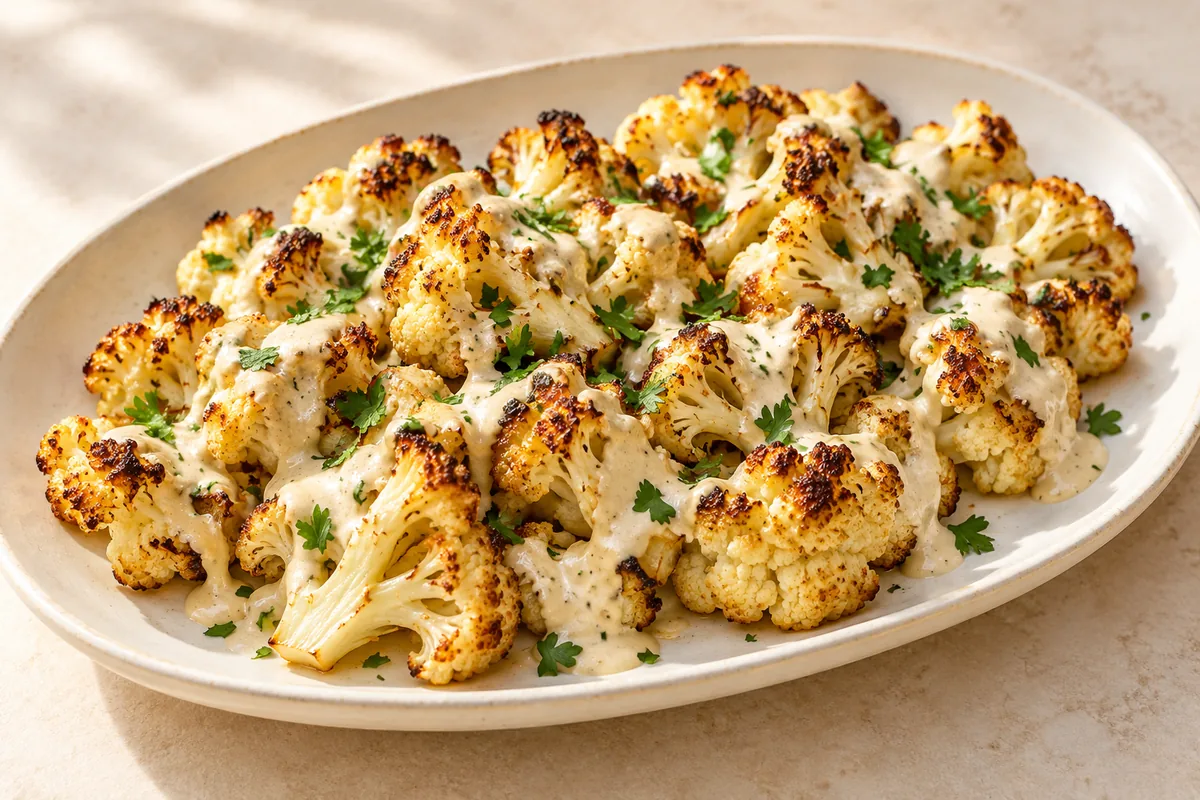
Roasted cauliflower with lemon tahini sauce is a vegetable side built around two different textures: browned florets and a smooth, pourable dressing. The cauliflower roasts without sauce so its edges can color. Lemon tahini is added afterwards, keeping the roasted surface from steaming under a wet coating.
The recipe makes four side portions and takes about 40 minutes, depending on your oven and the size of the florets. The key is not an exact timer alone: look for tender stems and deep golden contact points, then thin the sauce enough to drizzle rather than smear.
Ingredients and preparation notes
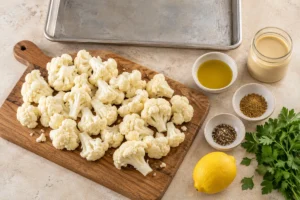
Use 600 g trimmed cauliflower florets, two tablespoons olive oil, half a teaspoon ground cumin, half a teaspoon fine salt and a quarter teaspoon black pepper. The sauce contains 60 g tahini, two tablespoons lemon juice, one small finely grated garlic clove and 60–90 ml cold water. Finish with two tablespoons chopped parsley.
Cut the florets into similarly sized pieces, about 4 cm wide. Split thick stems lengthwise to create a flat surface that can touch the tray. Smaller crumbs burn before large pieces soften, so keep very tiny pieces for another use or add them later. Rinse if needed and dry thoroughly; surface water delays browning.
Tahini is a paste of sesame seeds, not a thin sauce by itself. Stir separated oil back into the jar before measuring. Very bitter or old tahini cannot be fully repaired with more lemon. Use fresh-tasting paste and add the water progressively because different brands absorb different amounts.
The roasting and sauce method
1. Prepare an uncrowded tray
Heat the oven to 220°C (425°F). Use a broad rimmed tray lined with parchment that is rated for this temperature, or use the tray unlined if preferred. Measure the sauce ingredients while the oven heats. Keep the sauce separate from the vegetables throughout roasting.
2. Season and spread
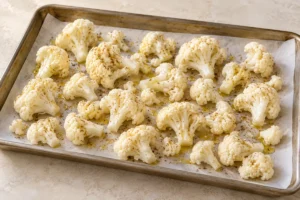
Toss the dry florets with olive oil, cumin, salt and pepper. Spread in one layer, leaving small spaces between pieces, with a flat cut side down where possible. If they fill the tray so tightly that pieces sit on one another, use two trays rather than adding more oil.
3. Roast to tender stems
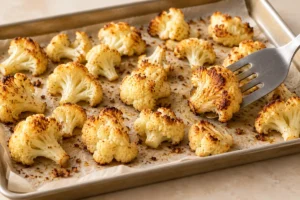
Roast for 25–30 minutes, turning once around the halfway point. The timing depends on the size and moisture of the cauliflower. Check a thick stem with a fork: it should yield without remaining woody. Golden and brown edges are desirable; uniformly black tips are not. Rotate the tray if one side of the oven cooks faster.
4. Whisk and finish
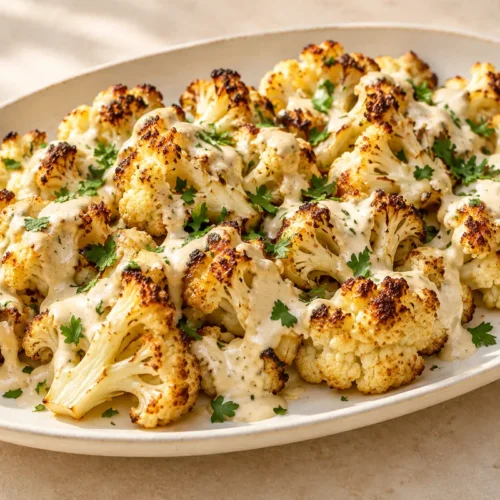
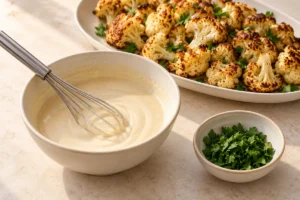
While the cauliflower roasts, stir tahini, lemon and garlic. Add cold water in small increments, whisking through the initial thickening until a creamy dressing forms. Stop when it falls from the spoon in a ribbon. Place roasted florets on a platter, drizzle with sauce and add parsley. Serve extra sauce separately so people can choose the amount.
Common mistakes and fixes
Pale, soft cauliflower usually comes from crowding, a cool oven or wet florets. Move it to a broader tray and allow more time rather than turning the heat excessively high at the end. If the outside colors before the stem softens, the pieces may be too large; lower the heat slightly and continue until tender.
Tahini sauce may look seized immediately after lemon is added. That is often normal: keep stirring and gradually add water. A thin, watery sauce can be thickened with a little more well-stirred tahini. Taste after thinning, because dilution reduces both saltiness and acidity. Raw garlic can become stronger as the sauce stands; start with the small clove specified.
Substitutions and serving ideas
The recipe contains sesame. For a sesame-free sauce, use an appropriate plain yogurt with lemon and garlic instead, checking dairy and cross-contact needs. It is a different dressing, not tahini. Parsley may be omitted if unavailable; do not add a large heap of another herb without considering its flavor. Broccoli can use a similar roasting approach but usually needs a different cooking time.
Pair this side with lemon chickpea couscous or tomato and white bean skillet. For a different roasted vegetable texture, see paprika potato wedges. A tray-based meal option is sheet-pan gnocchi with vegetables.
Make ahead, storage and reheating
Prepare the sauce in advance and refrigerate it in a covered container; stir and loosen it with a splash of water before using. For the best roasted edges, cook the cauliflower shortly before serving. Keep leftovers and sauce separate if possible.
Refrigerate cooked leftovers promptly and use within 3–4 days at 40°F (4°C) or below, following USDA leftover guidance. Reheat the cauliflower on a tray until it reaches 165°F (74°C) throughout, then add sauce. A microwave is convenient but softens the edges. Freezing cooked cauliflower is possible, but it becomes softer on thawing; freezing the dressed platter is not recommended for its texture.
Frequently asked questions
Can I use frozen cauliflower?
It releases more moisture and will not roast exactly like dry fresh florets. Roast from frozen in an uncrowded layer and follow the doneness cues, allowing extra time.
Does the sauce go in the oven?
No. Add it after roasting. Wet sauce on raw florets slows browning and can dry into a coating rather than staying creamy.
Can I skip the garlic?
Yes. Lemon and tahini still provide flavor. No quantity adjustment is needed for the omitted small clove.
How much water should I use?
Begin with 60 ml and add more a tablespoon at a time, up to about 90 ml if needed. The target is texture, not using every drop.
Printable recipe
Roasted Cauliflower with Lemon Tahini Sauce
Equipment
- 1 Large rimmed roasting tray and mixing bowl
Ingredients
- 600 g cauliflower florets about 4 cm across, washed and thoroughly dried
- 2 tablespoons olive oil
- 1/2 teaspoon ground cumin
- 1/2 teaspoon fine salt
- 1/4 teaspoon black pepper
- 60 g tahini well stirred
- 2 tablespoons lemon juice
- 1 small garlic clove finely grated
- 60 ml cold water plus up to 30 ml to adjust
- 2 tablespoons chopped parsley
Instructions
- Heat the oven to 220°C (425°F). Cut the cauliflower into similarly sized florets about 4 cm across and dry thoroughly. Stir the tahini in its jar before measuring it. Prepare the lemon, garlic and parsley.
- Toss cauliflower with olive oil, cumin, salt and pepper. Spread across a large rimmed tray in one layer, leaving space between florets rather than piling them up.
- Roast for about 25–30 minutes, turning halfway, until golden at the edges and tender when pierced. Check smaller florets early and remove any that finish sooner.
- While the cauliflower roasts, whisk tahini, lemon juice and garlic in a bowl. Gradually whisk in 60 ml cold water; continue whisking through the initially stiff stage until smooth. Add a little extra water if needed. Spoon over the roasted cauliflower and finish with parsley.
Notes
Illustrations are generated; this is editorial recipe guidance, not a documented kitchen test. Check our recipe policy for allergy and correction information.