Caramel Apple Iced Coffee with Apple Syrup
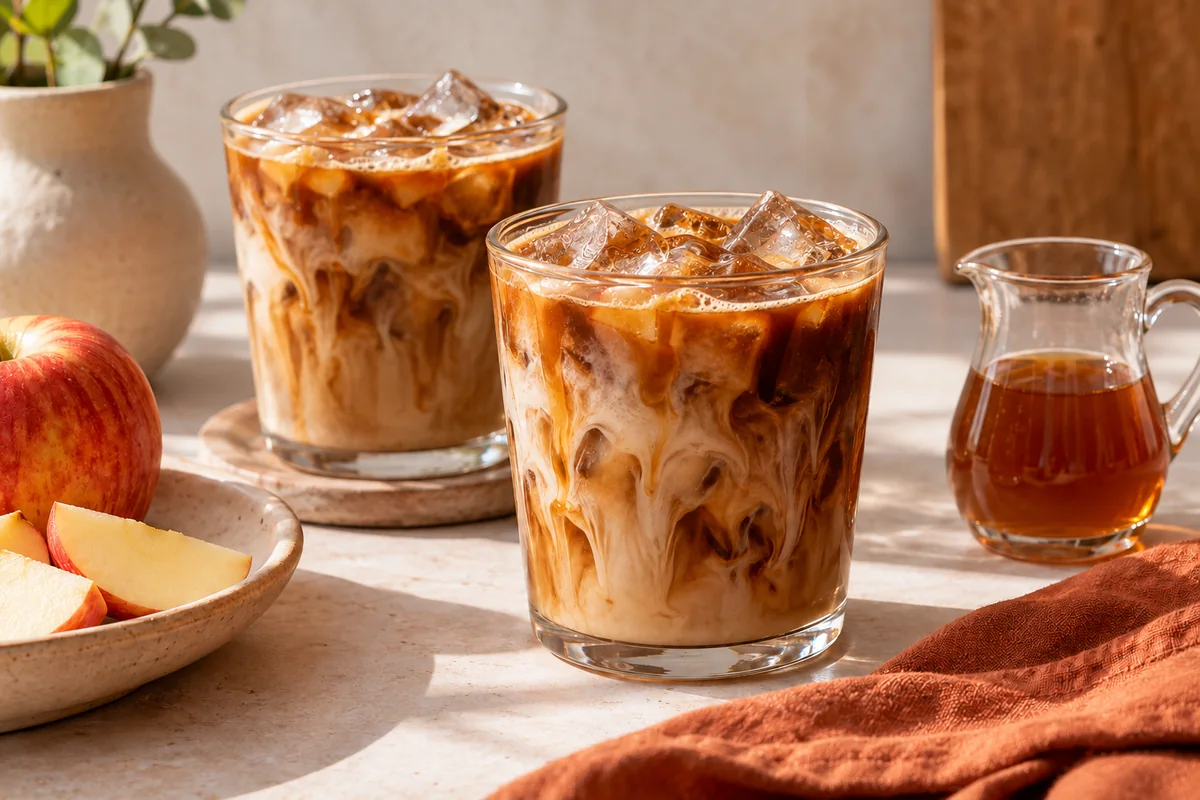
Caramel apple iced coffee layers cold coffee with a small homemade apple-cider syrup, milk and a modest caramel finish. Reducing the cider first adds apple flavor without filling the glass with watery juice.
Ingredients for caramel apple iced coffee
US-style nonalcoholic apple cider is an apple drink, not hard cider or vinegar. Its natural sweetness varies, so the syrup is used to taste rather than poured in automatically. Choose coffee brewed a little stronger than you would drink hot because ice and milk dilute it. The caramel can contain dairy even when the milk is plant-based; read the label rather than assuming the finished drink is vegan. This is a sweet coffee drink, not a nutrition or weight-loss recipe.
The complete measured ingredient list is in the printable recipe card below. Measure before starting, and keep ingredients that are reserved for finishing separate from those used during cooking.
How to make caramel apple iced coffee with apple syrup
Step 1
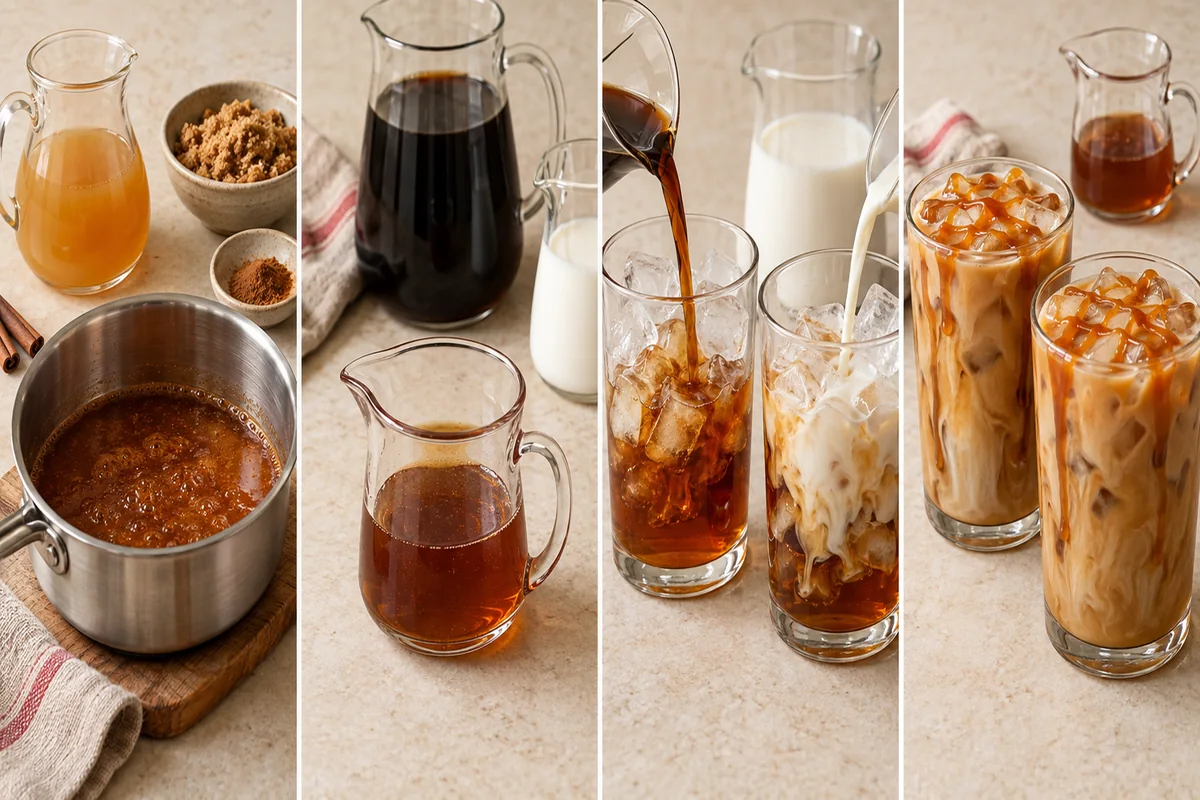
Combine apple cider, brown sugar and cinnamon in a small saucepan. Simmer gently 8–12 minutes until reduced to about 1/4 cup. Stir occasionally and stop before it becomes a sticky candy.
Step 2
Pour into a heatproof container and let cool for about 20 minutes. Brew coffee ahead and cool it, or use a chilled strong coffee you already have.
Step 3
Divide ice between two glasses. Add 1–2 tablespoons cooled apple syrup to each, then half the coffee and half the milk.
Step 4
Stir, taste and drizzle with 1 teaspoon caramel sauce per glass. Begin with less syrup if your cider or caramel is very sweet. Refrigerate any remaining syrup promptly.
Practical tips and troubleshooting
Hot coffee melts a glassful of ice very quickly, weakening both coffee and apple flavors. Cool each component first. Do not reduce the syrup until it stops flowing, as it becomes thicker when cold. A little cinnamon may settle; stir the syrup before measuring instead of interpreting a speckled layer as spoilage. Avoid pouring vinegar into the saucepan by checking the bottle before measuring the half cup.
Frequently asked questions
Can I use decaf?
Yes. Decaffeinated coffee still supplies the intended roasted flavor without requiring the same caffeine level.
Can I use apple juice?
Unsweetened apple juice is a workable variation, but sweetness and reduction time can differ. Taste before adding the full amount of syrup.
How long does the syrup keep?
Refrigerate in a clean covered container and use within 3 days under this conservative guidance. It is not a shelf-stable bottled syrup.
Serving and related recipes
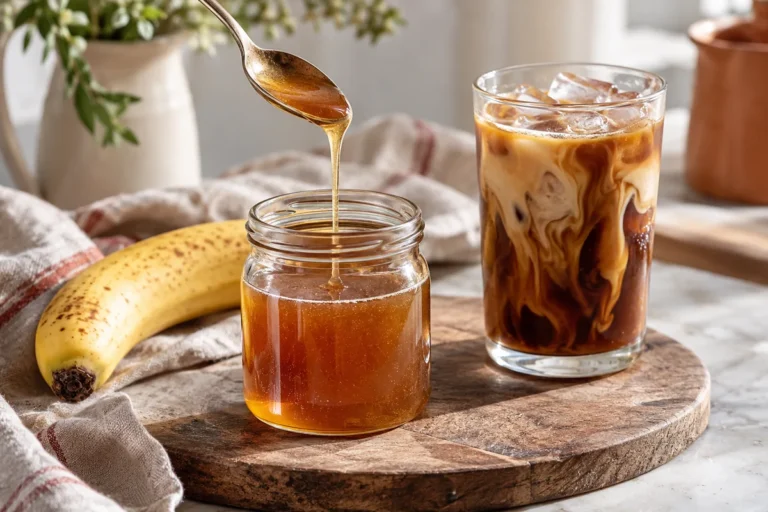
Try eggless applesauce snack cake, pumpkin cottage cheese pancakes, banana coffee syrup. These links lead to different preparation methods or complementary dishes, rather than a second version of this recipe.
Printable recipe
Caramel Apple Iced Coffee with Apple Syrup
Equipment
- 1 Small saucepan, measuring jug and two glasses
Ingredients
- 1/2 cup nonalcoholic apple cider 120 ml; not vinegar
- 2 tbsp light brown sugar
- 1/4 tsp ground cinnamon
- 1 cup strong brewed coffee 240 ml; fully cooled
- 1/2 cup milk or plain oat milk 120 ml
- 2 tsp caramel sauce check ingredients if dairy-free
- 2 cups ice cubes
Instructions
- Combine apple cider, brown sugar and cinnamon in a small saucepan. Simmer gently 8–12 minutes until reduced to about 1/4 cup. Stir occasionally and stop before it becomes a sticky candy.
- Pour into a heatproof container and let cool for about 20 minutes. Brew coffee ahead and cool it, or use a chilled strong coffee you already have.
- Divide ice between two glasses. Add 1–2 tablespoons cooled apple syrup to each, then half the coffee and half the milk.
- Stir, taste and drizzle with 1 teaspoon caramel sauce per glass. Begin with less syrup if your cider or caramel is very sweet. Refrigerate any remaining syrup promptly.
Notes
About the illustrations
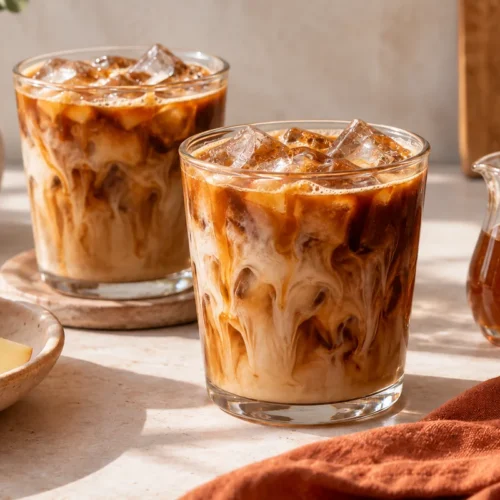
The finished-dish image and preparation guide are original AI-generated illustrations of the intended dish and stages, not photographs documenting a kitchen test. Follow the written quantities, temperatures and doneness cues; ingredients, appliances and pan dimensions can change the result.