Skillet Apple Cider Chicken Thighs
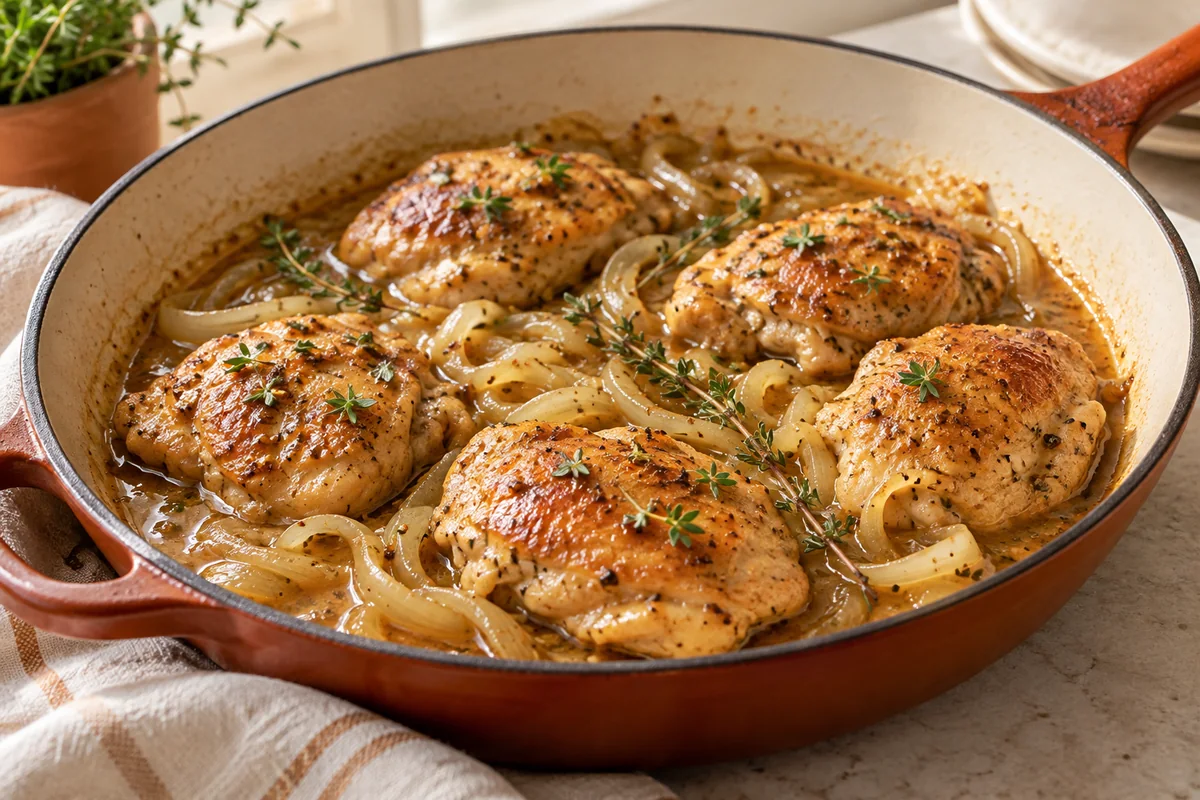
Apple cider chicken thighs cook in one skillet with a savory mustard-thyme pan sauce. The recipe uses nonalcoholic apple cider, not hard cider or apple cider vinegar, so the fruit flavor comes from a measured cooking liquid rather than a harsh vinegar reduction.
Ingredients for apple cider chicken thighs
Boneless skinless thighs allow a short stovetop simmer. Bone-in thighs take longer and should not be swapped in without adjusting the method. Nonalcoholic US-style apple cider is an unfermented apple drink; check the label if your local naming differs. Chicken broth and mustard balance its sweetness. A small cornstarch slurry thickens the sauce without flour coating on the chicken or a cream finish.
The complete measured ingredient list is in the printable recipe card below. Measure before starting, and keep ingredients that are reserved for finishing separate from those used during cooking.
How to make skillet apple cider chicken thighs
Step 1
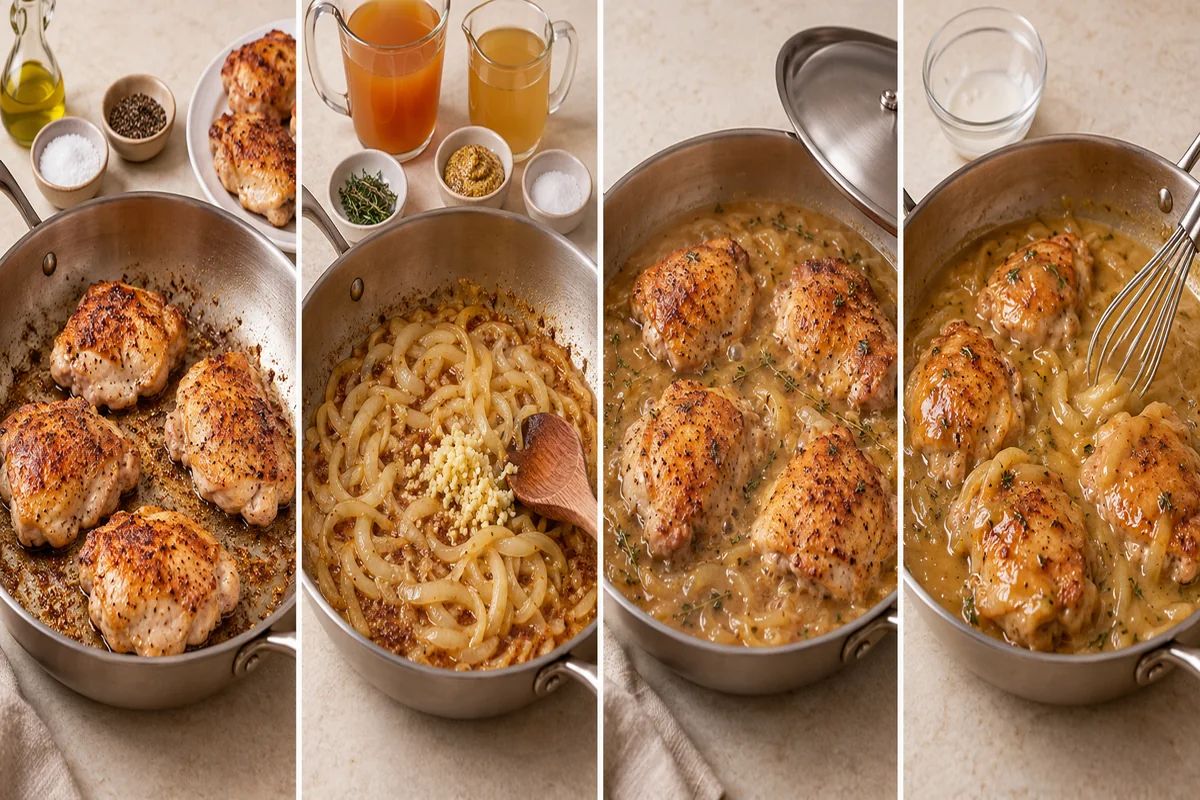
Pat chicken dry and season with half the salt and all the pepper. Heat oil in a wide skillet over medium-high heat. Brown thighs for 4–5 minutes per side, then move them to a plate; they may not yet be cooked through.
Step 2
Reduce heat to medium. Cook onion in the pan 4 minutes, then add garlic for 30 seconds. Pour in apple cider and broth and scrape browned bits from the bottom. Whisk in mustard, thyme and remaining salt.
Step 3
Return chicken and its juices to the skillet. Simmer gently, partly covered, for 8–12 minutes until the thickest thigh reaches 165°F (74°C). Move cooked chicken to a clean plate.
Step 4
Stir the cornstarch slurry again and whisk it into the simmering sauce. Cook 1–2 minutes until lightly thickened. Return chicken briefly to coat, then serve with sauce spooned over it.
Practical tips and troubleshooting
Patting the meat dry makes browning easier, but browning is not the final safety cue. The chicken can reach temperature before a very watery sauce thickens; remove it while finishing the sauce rather than repeatedly boiling the meat. Mix cornstarch with cold water, not hot pan liquid, and stir it just before pouring because it settles. Stop at a light coating consistency; a gluey sauce usually means too much starch or reduction.
Frequently asked questions
Can I use apple juice?
Unsweetened apple juice works as a flavor variation. Taste the sauce because clarity and sweetness differ between products.
Can I use apple cider vinegar instead?
No. A cup of vinegar is not a substitute for a cup of cider.
What goes with the sauce?
Plain rice, potatoes or roasted vegetables can catch the pan sauce. Choose a lightly seasoned side rather than another sweet glaze.
Serving and related recipes
Try air fryer boneless chicken thighs, roasted delicata squash, crisp oven potato wedges with paprika. These links lead to different preparation methods or complementary dishes, rather than a second version of this recipe.
Storage and reheating
Refrigerate perishable leftovers promptly in shallow covered containers, within 2 hours of preparation or serving. Keep dairy toppings separate when the method calls for it. For cooked savory dishes, use refrigerated leftovers within 3–4 days and reheat to 165°F (74°C). These times are conservative storage guidance, not a shelf-life guarantee. Discard food with signs of spoilage; a normal smell does not prove that mishandled food is safe.
For poultry or ground-beef safety, consult the USDA safe temperature chart. A thermometer is more reliable than the color of meat or its juices.
Printable recipe

Skillet Apple Cider Chicken Thighs
Equipment
- 1 Wide skillet with lid and instant-read thermometer
Ingredients
- 1 1/2 lb boneless skinless chicken thighs 680 g
- 1 tbsp olive oil
- 3/4 tsp fine salt divided
- 1/4 tsp black pepper
- 1 small yellow onion thinly sliced
- 2 garlic cloves minced
- 1 cup nonalcoholic apple cider 240 ml; not vinegar
- 1/2 cup low-sodium chicken broth 120 ml
- 1 tbsp Dijon mustard
- 1/2 tsp dried thyme
- 1 tsp cornstarch mixed with 1 tablespoon cold water
Instructions
- Pat chicken dry and season with half the salt and all the pepper. Heat oil in a wide skillet over medium-high heat. Brown thighs for 4–5 minutes per side, then move them to a plate; they may not yet be cooked through.
- Reduce heat to medium. Cook onion in the pan 4 minutes, then add garlic for 30 seconds. Pour in apple cider and broth and scrape browned bits from the bottom. Whisk in mustard, thyme and remaining salt.
- Return chicken and its juices to the skillet. Simmer gently, partly covered, for 8–12 minutes until the thickest thigh reaches 165°F (74°C). Move cooked chicken to a clean plate.
- Stir the cornstarch slurry again and whisk it into the simmering sauce. Cook 1–2 minutes until lightly thickened. Return chicken briefly to coat, then serve with sauce spooned over it.
Notes
About the illustrations
The finished-dish image and preparation guide are original AI-generated illustrations of the intended dish and stages, not photographs documenting a kitchen test. Follow the written quantities, temperatures and doneness cues; ingredients, appliances and pan dimensions can change the result.