Yogurt Flatbread Without Yeast
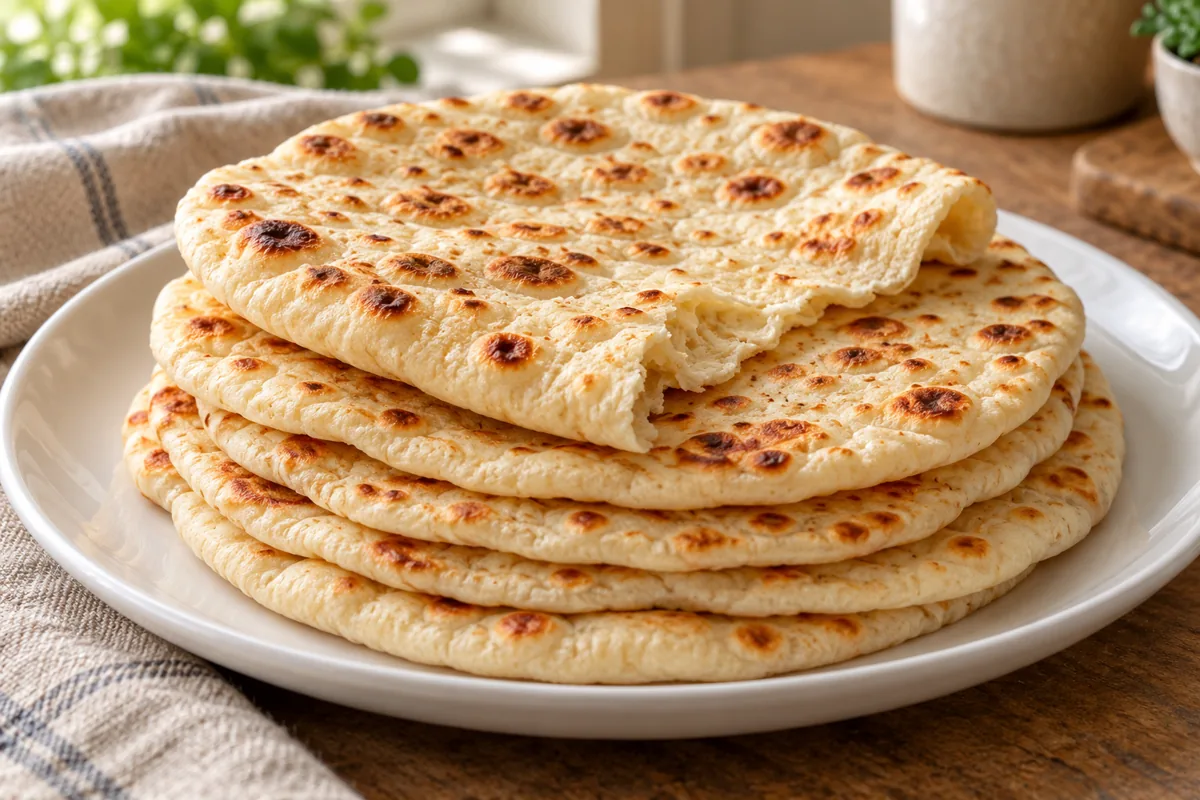
Small stovetop flatbreads made with all-purpose flour, baking powder and plain Greek yogurt. No yeast or long rise is needed; roll them thin and cook in batches.
A flour bread, not a flourless wrap
These flatbreads are made from wheat flour and strained yogurt, with baking powder for a little lift. They are different from a baked cottage-cheese-and-egg wrap. No yeast is used, so there is no fermentation or long rise, but the short covered rest helps the dough roll more easily. Baking powder and baking soda are not interchangeable in this recipe.
Why weights and yogurt texture matter
Use the gram quantities for flour and yogurt rather than packing different amounts into a cup. Greek yogurt varies from firm to loose depending on the brand. Start with the measured ingredients, then assess the dough: it should be soft and cohesive, a little tacky but workable. Add only small amounts of flour or water as needed. Adding a large handful of flour can make it dry and stiff; adding too much water makes rolling difficult.
Roll thin enough to cook through
Divide the dough into six pieces before rolling. A 15 cm circle around 3 mm thick is a useful target, not a demand for perfect geometry. Thick pieces can brown outside before the center cooks. Let a piece rest briefly if it keeps springing back rather than forcing it with lots of extra flour. Do not taste raw dough; flour can contain harmful germs before cooking.
Control pan heat between batches
Medium heat is a starting point because skillets and stoves differ. The first flatbread helps you judge it. If dark spots appear before the top has begun to set, reduce the heat. If it stays pale for several minutes, raise it modestly. Loose flour can burn in an empty hot pan, so brush it out carefully between batches. A hot handle and residual heat still need care even after the burner is reduced.
Serving and storage
Cover cooked breads loosely with a clean towel while you finish the batch. Serve warm with soup or a dip. Contains wheat and milk; the recipe has not been validated with gluten-free flour or dairy-free yogurt. Cool leftover breads, then refrigerate in a closed container for up to 3 days or freeze individually separated by parchment for up to 1 month. Warm gently in a pan or oven until heated through; do not claim the same texture as freshly cooked bread.
Can I use self-raising flour?
Self-raising flour contains its own raising agent and sometimes salt, with formulas varying by country. It is not a weight-for-weight swap while also keeping all this recipe's baking powder. For this page, use plain all-purpose flour and the measured baking powder so the starting formula is clear.
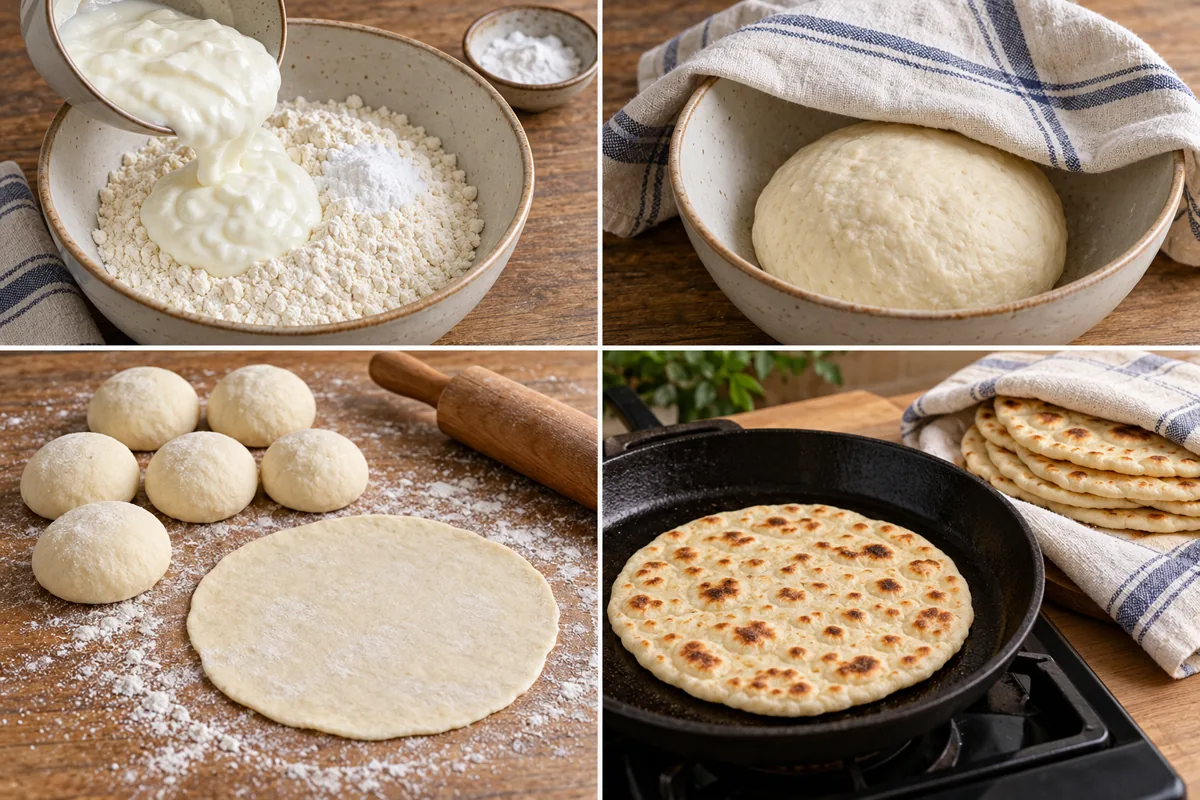
Step-by-step illustration
More recipes to make a meal
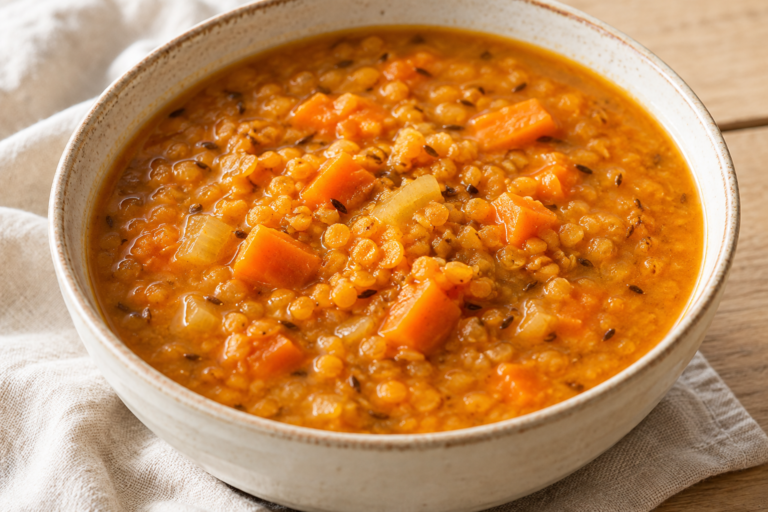
Serve warm flatbreads beside red lentil and carrot soup. Pair with the new white bean dip without tahini.
Food safety and editorial notes
Contains wheat and milk. Do not eat raw dough. Cook in batches; total includes rest. Original editorial guidance, not represented as kitchen-tested. AI-generated illustrations are not photographs of recipe testing.
For safe handling of uncooked flour, see the FDA flour safety guidance.
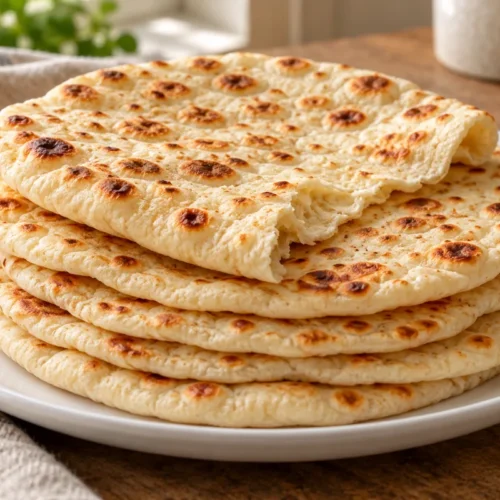
Yogurt Flatbread Without Yeast
Equipment
- 1 Mixing bowl, kitchen scale, rolling pin and heavy skillet
Ingredients
- 250 g all-purpose flour plus a little for dusting
- 250 g plain Greek yogurt unsweetened
- 1 1/2 teaspoons baking powder not baking soda
- 1/2 teaspoon fine salt
- 1 teaspoon olive oil for the dough
- 1–2 teaspoons water only if dough is dry
Instructions
- Whisk flour, baking powder and salt in a bowl. Add yogurt and olive oil. Stir into a rough dough, then use clean hands to bring it together. If dry crumbs remain, add water 1 teaspoon at a time; if very sticky, dust with a little flour.
- Knead gently for 1–2 minutes until cohesive, not perfectly smooth. Cover and rest for 10 minutes. Divide into 6 similar pieces on a lightly floured surface.
- Roll each piece into a circle about 15 cm/6 inches wide and about 3 mm thick. Heat a heavy skillet over medium heat. Cook one flatbread for about 2–3 minutes until brown spots appear underneath, then flip and cook the other side for about 1–2 minutes.
- Check the center is cooked rather than wet or gummy, adjusting heat downward if the outside browns too fast. Transfer to a clean towel and cover loosely to keep soft. Repeat with the remaining dough, brushing excess loose flour from the pan between batches if necessary.